App to Monitor Glucose
Announcements
Apps to monitor glucose have revolutionized the way diabetics manage their health.With the right technology, you can track your glucose levels in real time, receive personalized alerts, and make more informed decisions about your diet and medication.
Announcements
The evolution of glucose monitoring apps has transformed a task once limited to punching your fingers several times a day into a continuous and less invasive process.You can now synchronize data with your smartphone, share information with doctors and identify patterns that directly affect your quality of life.
What is an App to Monitor Glucose
An app to monitor glucose is software that connects to continuous measuring devices or conventional meters to record and analyze your blood sugar levels. These apps act as a smart digital diary, storing each reading and creating automatic reports that you and your doctor can consult. Most of them offer intuitive interface with visual graphics that make it easy to understand how you are evolving over days, weeks or months.
The differential of a good app is the ability to integrate with continuous glucose sensors, such as FreeStyle Libre or Dexcom, which eliminate the need for multiple perforations.You can view your trends in real time, receive notifications when levels leave the range recommended by your doctor and even document meals and exercises that influence your results. This integrated approach allows you to better understand the relationships between your actions and the measured glucose values.
Real Use Cases and Practical Scenarios
Imagine that you are a type 2 diabetic who works in an office with irregular hours and often skips meals. Without a monitoring app, you only discover problems when you do punctual tests, often out of the real context. With an application connected to a continuous sensor, you receive a warning when you are about to hypoglycemia while working, allowing you to eat a quick snack before feeling bad.
Another common case is when you have type 1 diabetes and need to adjust your insulin several times a day. A quality app automatically records each injection, correlates with your glucose measurements and helps you identify when your dose needs to increase or decrease. If you notice that your mornings are always high in glucose, the history of the app shows just that, facilitating a productive conversation with your endocrinologist about basal insulin adjustments.This detailed documentation saves time in the appointment and improves the accuracy of treatment.
For parents of children with diabetes, the apps offer peace of mind and control.You can remotely monitor your child’s glucose levels at school, receive immediate alerts if something goes out of the pattern, and even share the data with teachers and childcare providers.This collaborative monitoring ensures that the child receives consistent support in all environments they attend, reducing anxiety for both parents and the child.It is a classic example of how technology humanizes treatment by allowing closeness even when you are not physically present.
Essential Features You Need to Know
Automatic synchronization with sensor devices is the heart of an efficient app for monitoring glucose. When you choose an app, make sure it connects easily with the sensor or meter you already use, eliminating the need to manually type each reading. Apps like OteApp offer seamless integration with multiple devices, ensuring your data flows naturally to a single place. This automation reduces typing errors and saves precious minutes in your daily routine.
Customizable alerts are another critical feature that you should not ignore. You should be able to set your own glucose ranges considering your doctor’s recommendations, and the app warns you when you leave this range.If your doctor wants you to keep glucose between 100 and 180 mg/dL, the app sets these limits and vibrates your phone when you are in hypoglycemia or hyperglycemia.This continuous surveillance allows you to react quickly instead of waiting hours without knowing something is wrong.
Reporting is critical to effective medical follow-up. A good glucose monitoring app lets you create charts and summaries that show your progress over different periods, identify your most at-risk schedule, and visualize how medications and exercise impact your numbers.You can export this data in PDF or send it directly to your doctor before your appointment, turning a vague conversation about “how your glucose is” into a discussion based on real evidence of your patterns.
How to Choose the Right App for Your Needs
Before you download any app, you need to consider which devices you currently use or intend to use. If you have a Dexcom or FreeStyle Libre continuous sensor, look for an app that natively integrates with those devices instead of requiring manual input. Compatibility is critical because an app that works perfectly with your sensor is worth much more than a beautiful interface that requires constant typing. Also check that the app supports your operating system, iOS or Android, and receives frequent updates that maintain compatibility with new sensor models and phones.
The privacy and security of your health data is absolutely critical.You are sharing sensitive information, so choose an app that encrypts your data, has data protection law compliance certifications, and makes your storage and sharing policy clear.Reliable apps never share your data with third parties without explicit consent, and allow you to control exactly who can see your information.
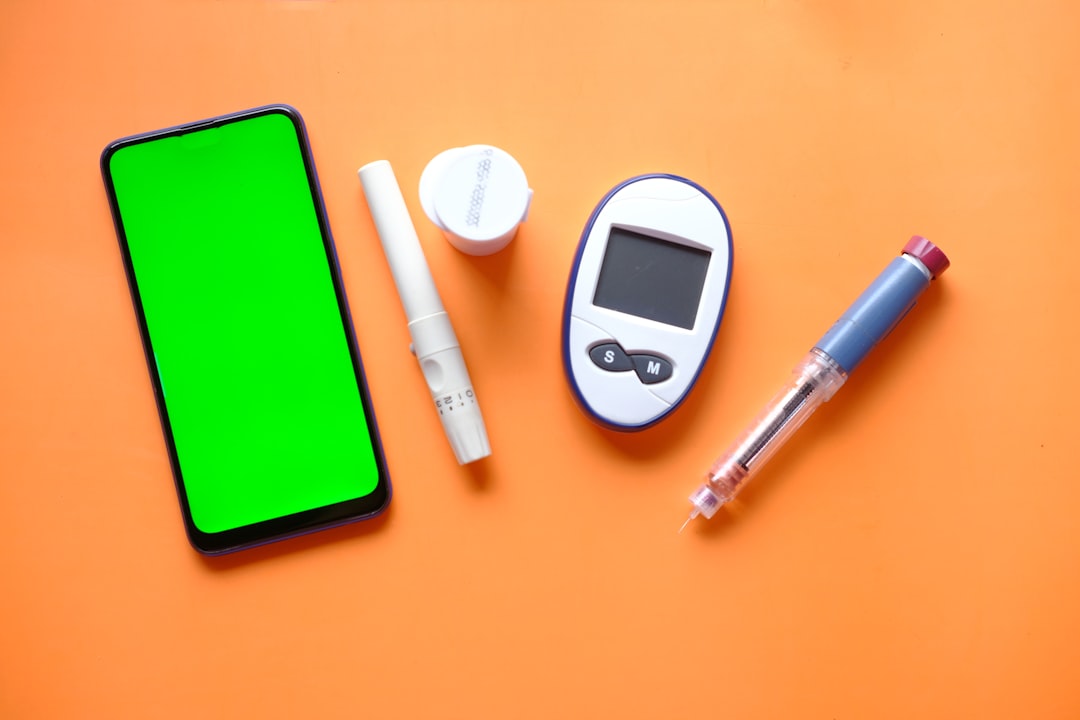
Ease of use is as important as advanced functionality, especially if you’re going to use the app daily for years. An app with lots of features but confusing interface causes frustration and abandonment.Search for apps that have clean design, intuitive menus and require a few clicks to access the information you frequently query.Many apps offer free version or trial period; use this opportunity to really try before you pay, making sure you feel comfortable browsing through all the main features.
Integrating the App into Your Daily Health Routine
Using an app to monitor glucose effectively requires more than just downloading it and expecting magical results. You need to establish a routine that considers your app as a central part of your diabetes management plan.Start by setting your alerts realistically, basing yourself on your endocrinologist’s recommendations and adjusting as you notice your patterns.If you always have high glucose after breakfast, it might make sense to adjust your alert to a slightly larger range at that time while working the issue with your doctor.
Document behavioral patterns beyond numbers. A truly useful app allows you to record meals, exercise, stress, and sleep, creating a complete context for each glucose reading.When you see that your glucose drops always after an hour of intense exercise, or that specific foods cause consistent spikes, you have concrete information to optimize your choices. This approach turns the app from a simple meter into a self-awareness instrument that improves your long-term health decisions.
Share your data regularly with your doctor and use the app information to guide conversations at the appointment. You can present graphs showing that your fasting glucose has risen in the last 15 days, or that there is a clear pattern of nocturnal hypoglycemia that needs to be investigated. This type of informed dialogue allows more accurate medication adjustments and faster identification of problems. Your doctor saves time by analyzing data already compiled and you gain autonomy by understanding patterns of your own health.
Common Challenges and How to Overcome them
One challenge you may face is data fatigue, where so much daily information about glucose causes anxiety rather than relief. If you track each number obsessively, the natural variation in glucose can seem worrisome when it’s actually normal.The solution is to focus on weekly or monthly trends instead of reacting to each reading alone, and establish specific check-ins with your data instead of constantly checking.
Another hurdle is inconsistent synchronisation between your sensor and the app, which leaves you without critical data at important times. You can reduce this problem by keeping your phone close to the sensor when possible, regularly checking if the connection is active and leaving the app up to date with the latest version. If your specific app has chronic connection issues, it may be time to consider better alternatives, as an untrusted app undermines your health management rather than helps.
Over-reliance on alerts is a real risk you should manage. When the app notifies you of every small deviation, you can start ignoring alerts by exhaustion or adjusting them to such wide ranges that lose effectiveness.The balance is in setting alerts only for really critical situations where you need to intervene, such as confirmed hypoglycemia or rapid fall trends.Work with your doctor to set these limits so that the app is an assistant that warns you when it really matters, not a constantly triggered alarm.
You may also come across the compatibility issue when you switch sensors or phone. A good app for monitoring glucose keeps your histories intact even when you switch sensory devices, and offers clear support for data migration when you switch phones.If you are considering switching apps, make sure you can export your historical data in a format that preserves your glucose history.Your past data is your most valuable medical asset, so never abandon an app without ensuring your records are saved.
Future Technologies and Trends in Glucose Monitoring
Artificial intelligence is transforming how glucose monitoring apps work, offering more accurate predictions of how your numbers will evolve in the coming hours. Advanced algorithms analyze your historical patterns, environmental factors, and behavioral data to alert you not only when your glucose is abnormal now, but when it is about to become abnormal. You may receive a warning 30 minutes before a predicted hypoglycemia, allowing for preventive rather than reactive action.
Integration with automatic insulin delivery systems is creating closed loops where the app communicates directly with smart pumps. Imagine a future where your app identifies a trend of high glucose and automatically adjusts the insulin released by your pump, without requiring you to intervene manually. You still have full control and can override any automatic decision, but for many routine scenarios, the system makes decisions that greatly reduce the mental work of management. This intelligent automation is especially promising for type 1 diabetes where frequent adjustment is essential.
Augmented reality and more advanced interfaces are making apps less dependent on abstract numbers and more focused on intuitive visualizations. Instead of looking at a two-dimensional graph, you can view your glucose as a visual indicator that changes color as you move from hyperglycemia to hypoglycemia. These improved interfaces reduce the cognitive burden of interpreting complex data, making the app more accessible even to users less familiar with technology.