Music of the 80s: Unforgettable Hits
Announcements
Music from the 80s marked an entire generation and continues to dominate playlists to this day.This period brought technological innovations, revolutionary musical styles and artists who defined decades of pop, rock and electronic.
Announcements
You probably know some of the most played songs of this era, but understanding the historical and cultural context behind them offers a completely new perspective on these immortal compositions.This practical guide will take you through the major musical movements, iconic artists, and hits that transformed the global music scene during the 80s.
The Technological Revolution in 80s Music
The 80s were marked by the arrival of the synthesizer, which fundamentally changed how music was created and produced. This electronic instrument allowed producers and musicians to create completely new sounds, impossible to reproduce with traditional instruments.Bands such as Depeche Mode, Kraftwerk and Human League explored these possibilities, creating the basis for synth-pop and modern electronic music.
MTV, released in 1981, transformed the way music was consumed and promoted, making visual imagery as important as sound quality.Artists like Michael Jackson, Madonna and Duran Duran quickly understood this and created memorable music videos that became as iconic as the songs themselves.
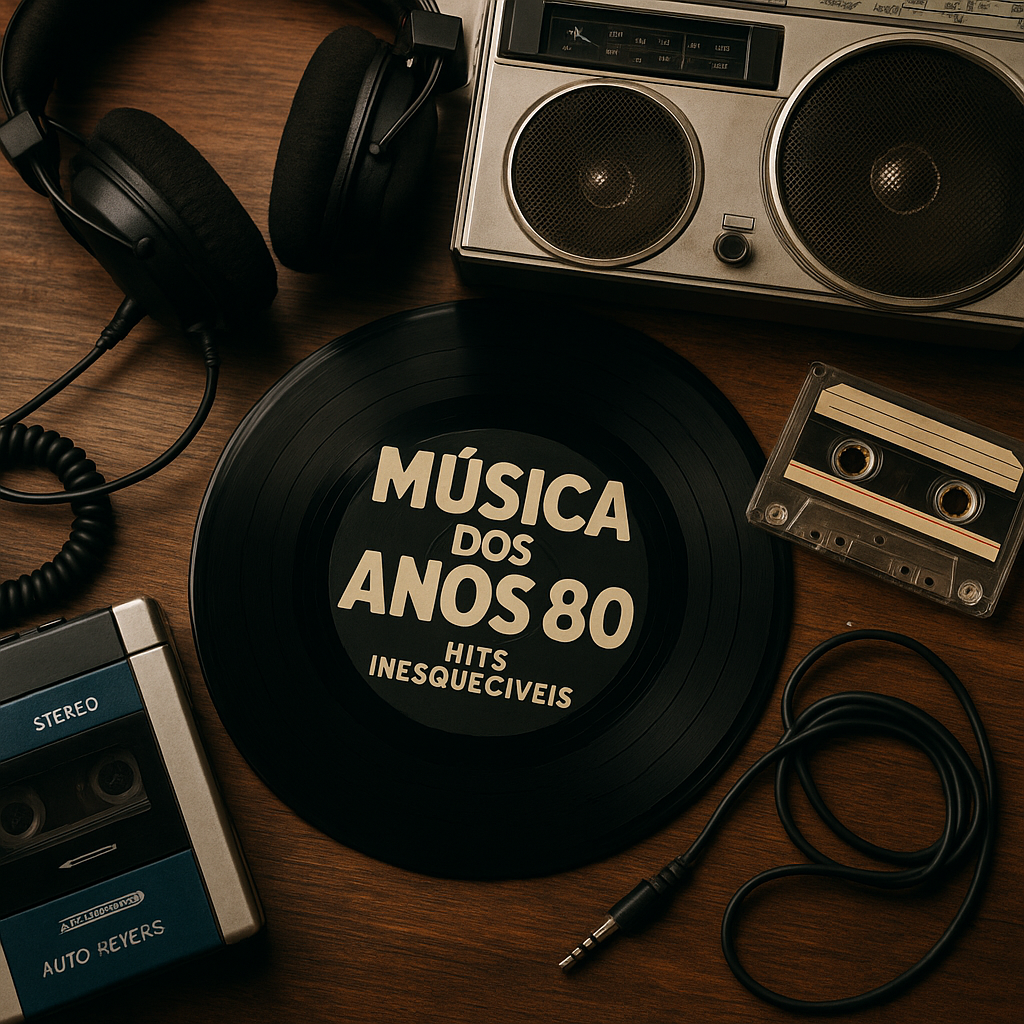
Recording technology improved significantly, allowing for higher quality production and more sophisticated sound effects. Portable turntables and later walkman have revolutionized the way people listen to music, allowing them to take their playlists anywhere.
Synth-Pop: The Defining Sound of the Decade
Synth-pop was arguably the most representative genre of the 80s and perfectly reflected the optimism and futurology of the time. Depeche Mode presented the darkest and most electronic approach to the style with hits like “Personal Jesus” and “Never Let Me Down Again”, while Duran Duran carried a more danceable and accessible sensibility.
The Human League and Soft Cell represented the most experimental variations of synth-pop, creating unique soundscapes that influenced future generations of electronic musicians.The Human League’s “Don’t You Want Me” became one of the biggest hits of the decade, demonstrating that machines could generate genuine emotional connections with audiences.
The beauty of synth-pop lay in its combination of pop accessibility with electronic experimentation.You could listen to pleasant music on the radio and at the same time appreciate the technical and creative complexity behind the production.This perfect balance between commercial and artistic ensured the longevity and continued relevance of the genre among music fans.
The Boom of Pop and Rock of the 80s
Michael Jackson completely redefined the meaning of being a pop star during the 80s with his album “Thriller”, the best-selling album of all time. “Billie Jean”, “Beat It” and the music video for “Thriller” set new standards for the music industry and video production. Jackson proved that a solo artist could compete with entire bands in terms of cultural and commercial impact, influencing countless musicians who came after.
Madonna emerged as the queen of pop in the ’80s, constantly reinventing her style and image while keeping her sticky hits at the top of the charts. “Like a Virgin”, “Material Girl” and “Like a Prayer” not only dominated the charts, but also generated debates about sexuality, religion and feminism in popular music.
Prince brought an eclectic and virtuoso approach to pop, blending rock, funk, soul and electronic in surprisingly coherent compositions. “Purple Rain”, “When Doves Cry” and “Kiss” show Prince’s musical versatility, who played multiple instruments and controlled every aspect of his music.
Classic Rock and the Explosion of Hair Metal
The 80s saw classic rock bands like The Rolling Stones, Led Zeppelin (in reunions) and Queen continue their relevance with memorable albums and tours.Queen in particular won new audiences with the album “The Works” and epic performances at rock festivals. “Another One Bites the Dust” and “Radio Ga Ga” prove that traditional rock could live perfectly with the electronic trends of the time.
Hair metal or glam metal emerged as a gigantic cultural phenomenon, combining heavy guitar with theatrical aesthetics and bombastic visuals. Bands like Motley Crue, Def Leppard, Bon Jovi and Guns N’ Roses filled entire stadiums and dominated the rock charts.These artists did not take music as seriously as their progressive rock counterparts, but created world-class entertainment that resonated with millions of fans.
Bon Jovi, especially, managed to balance musical credibility with massive commercial appeal, becoming one of the best-selling bands of the 80s. “Living on a Prayer” is a virtually perfect song from the point of view of pop-rock songwriting, with a memorable hook and inspiring message. Def Leppard took rock production to new technical heights, with “Hysteria” being a revolutionary album in terms of studio creativity.
New Wave, Post-Punk and Alternative
New wave offered a more experimental and sophisticated alternative to 80s commercial pop, with bands like Talking Heads, Gang of Four and XTC creating smart and challenging music. Talking Heads especially went beyond simple entertainment, creating a conceptual and artistic approach that influenced countless later artists. “Once in a Lifetime” and “Burning Down the House” show the band’s ability to create brain music that was both danceable and provocative.
The Cure developed a unique sound that blended post-punk with accessible pop, creating hits like “Just Like Heaven” and “Boys Don’t Cry” that captured angst and romance in equal doses. Robert Smith became a cultural icon, representing an alternative to the action heroes of the 80s with his sensitive and intellectual approach.
Joy Division and its later incarnation, New Order, created the perfect bridge between 70s punk/post-punk and 80s electronic music. “Blue Monday” is considered one of the most influential songs of all time, revolutionizing dance-rock and inspiring countless producers.New Order’s experimental approach showed that traditional rock could evolve without losing its emotional strength and raison d’etre.
Soul, Funk and R&B in the 80s
While pop and rock dominated the airwaves, soul, funk and R&B created an equally important and influential parallel movement.Lionel Richie achieved massive success both as a member of Commodores and as a solo artist, with “Hello” and “All Night Long” becoming instant classics.His sophisticated and romantic approach to soul refined the genre to a mainstream audience without losing the soul of traditional music.
Luther Vandross set new standards for soul and R&B music in the 80s, with his unmistakable voice and technically flawless vocal approach. “Here and Now” and “Never Too Much” show an artist completely aware of his vocal power and able to create exciting ballads that competed in popularity with the biggest pop hits of the time.
Prince and Michael Jackson, in addition to being pop stars, contributed significantly to the evolution of R&B and funk during the 80s. Prince especially kept alive a kind of sophisticated and virtuoso funk that would otherwise be lost, while Michael Jackson brought elements of classical soul to his massive pop productions.
The Greatest Hits and Music of the 80s that Defined a Generation
Some songs from the 80s transcended their time and became immortal in pop culture, often appearing in movies, series and social events to this day. Madonna’s “Like a Virgin”, Michael Jackson’s “Billie Jean”, and Prince’s “Purple Rain” are simply unforgettable, each bringing something unique and memorable that justifies their longevity.These songs work on multiple levels: they are sticky enough for casual listeners, but complex enough to merit serious critical appreciation.
Whitney Houston conquered the world with “I Wanna Dance with Somebody” and her acclaimed cover of “I Will Always Love You”, demonstrating that an extraordinary voice could sustain an entire career on top of impressive vocals. “Greatest Love of All” became an empowerment anthem and continues to be played at special events. Whitney proved that you did not need electronic tricks or provocative imagery to completely dominate the music industry; sheer vocal excellence was enough.
U2 evolved from a post-punk band to a pop-rock powerhouse with “The Joshua Tree”, creating anthems like “With or Without You” and “Where the Streets Have No Name” that defined the experience of being young in the late 80s. Bono became a cultural icon, representing a mix of heavy rock and social awareness. U2’s 80s music offered escapism, but also drew attention to real social problems, creating a model for engaged rock that remains relevant.
The Music Industry and the Parade Phenomenon
The 80s saw the emergence of hit charts as the dominant commercial force, with the Billboard Hot 100 and UK Singles Chart largely dictating what was considered musical success. MTV amplified this phenomenon, making music video presence virtually as important as sound quality to reach the top of the charts.
The rock tours of the 80s became spectacular mass events, with stadiums being completely crowded by passionate fans.The Rolling Stones, Led Zeppelin (in one-time reunion), Queen and Pink Floyd (in one-time reunion) created memorable experiences that set new standards for what a live performance could be. These tours generated astronomical revenues and proved that 80s music was a business on an industrial scale.
The recording industry flourished financially during the 80s, with the sale of vinyl records, cassettes and the emerging CD format growing exponentially.You could buy music in different formats, allowing different listening experiences depending on the context. This variety of formats kept the industry vibrant and offered opportunities for artists of all sizes to find their audience.
International Influences and Cultural Mergers
The music of the 80s was not exclusively anglophone or american, with artists from around the world bringing their cultural influences to the global stage. ABBA of Sweden continued its relevance in the 80s with memorable performances, while David Bowie explored African and electronic influences in “Let’s Dance”. Globalization was transforming music, allowing mergers and collaborations that would have been unthinkable in previous decades.
Caribbean music, particularly reggae and dancehall, gained global audience in the 80s, with Bob Marley influencing numerous artists from other genres.Grace Jones combined reggae, funk, electronic and experimental music in a revolutionary approach that challenged traditional categories of musical genre.
Latin music also flourished in the 80s, with artists such as Julio Iglesias and Juan Luis Guerra achieving international success while maintaining their cultural roots.The fusion of Latin styles with modern pop production created a unique sound that attracted diverse audiences.
The Legacy of 80s Music in Today’s Days
The music of the 80s continues to profoundly influence contemporary artists, whether through direct samples, stylistic tributes or creative reinterpretations. Modern synth-pop bands like Chvrches and The Midnight establish their identities based on elements directly extracted from the synthesizers of the 80s. This renaissance demonstrates that the quality of compositions and arrangements of the 80s transcends any temporal or fashion limitation.
Streaming platforms like Spotify and Apple Music ensure that ’80s songs are permanently accessible, allowing new generations to discover these classic works. Streaming algorithms often put ’80s classics into “Throwback” or “80s Essentials” playlists, keeping these songs alive in cultural awareness.You can listen to Michael Jackson, Prince or Duran Duran as easily as you listen to contemporary artists.
Documentaries, movies and TV series often use 80s music as a soundtrack, creating a powerful nostalgia that resonates with audiences of all ages. “Stranger Things”, for example, reintroduced 80s music to a young audience, creating a new cycle of appreciation and discovery.This proves that the quality of 80s music does not depend on specific historical context; artistic excellence remains eternally relevant.
Covers and acoustic versions of 80s classics remain popular, with contemporary artists recognizing the enduring value of these compositions.The song structure, melody and arrangements of the greatest hits of the 80s are so solidly constructed that they resist reinterpretations without losing their appeal.