
Parental control: an ally to follow conversations
Announcements
Parental control has become essential in the digital age, especially when you need to protect your children on communication platforms.A chat app with monitoring features offers peace of mind and security without over-invading privacy.
Announcements
You face a common dilemma: how to keep your kids safe online without being overly controlling? The answer lies in utilizing smart tools that balance protection and trust, allowing you to follow conversations in a conscious and responsible manner.
Why parental control in chat apps is so important
Digital communication is the main way teenagers and children interact today, whether through WhatsApp, Instagram, Telegram or other platforms. You need to be aware that online predators, cyberbullying and inappropriate content circulate in these spaces constantly. A parental control app specializing in conversations allows you to detect dangerous behaviors before they become critical situations.
When you implement proper monitoring, you significantly reduce the risks of your child being the victim of grooming, sexual harassment or exploitation. Additionally, you can identify patterns of bullying or self-sabotaging behaviors that may indicate emotional problems.Early detection is the best protection strategy you can offer.
The current trend in the parental control app market is to balance security with respect to privacy.You should not only monitor, but also educate your children about responsible internet use.The best platforms offer detailed reports and automatic alerts for suspicious situations, reducing the need for you to constantly be checking conversations manually.
Essential features you should look for
An efficient parental control app offers message monitoring with alerts based on predefined keywords. You can set up automatic notifications when you detect terms related to violence, drugs, harassment or other dangerous content. This approach allows you to respond quickly without being invasive constantly.
The full conversation history view is critical for you to understand the context of your child’s interactions. Not always an isolated message reveals the danger, but the pattern of communication over time can be very revealing. You should also look for apps that show information about contacts, including public profiles and activity history.
Advanced content filters allow you to block certain apps or restrict access to specific times.You can set healthy usage limits, preventing conversations from happening at night or in study times.Geolocation is another valuable function, ensuring you know where your child is in real time.
Detailed analytical reports turn raw data into actionable information for you. The best apps generate daily or weekly summaries showing communication patterns, most frequent contacts, and potential concerns.
Current trends in parental monitoring tools
Artificial intelligence is revolutionizing how you monitor conversations smarter.Modern algorithms detect context, sarcasm and implicit threats that simple keyword search methods would miss.
Transparency is increasingly valued by the best parental control platforms.You find apps that let the child know that they are being monitored, creating an environment of mutual trust. This approach reduces conflicts and paradoxically increases the effectiveness of monitoring because children behave more responsibly when they know they are being followed.
Cross-platform integration is now essential for you who need to monitor Android, iOS, computers and tablets simultaneously. Modern apps synchronize data in real time, allowing you to access information from any device.
Data privacy has become a top priority in the industry.You should choose platforms that encrypt information, do not sell data to third parties, and follow regulations such as GDPR. The best tools store data locally or on secure servers, ensuring that sensitive information about your family remains protected.
How to implement parental control responsibly
You should start an honest conversation with your child about why you are implementing monitoring. Explain that the intent is to protect him, not invade his privacy, and set clear boundaries on how you will use the information collected.
You can establish that conversations with strangers will be monitored more closely, while communications with school friends have fewer restrictions.This nuanced approach shows that you are being fair and not monitoring indiscriminately.
Review the information collected regularly, but without obsession.You do not need to read each message daily, especially if the app offers automatic alerts. Checking weekly reports is usually enough to keep vigilant without it consuming all your time or impairing trust.
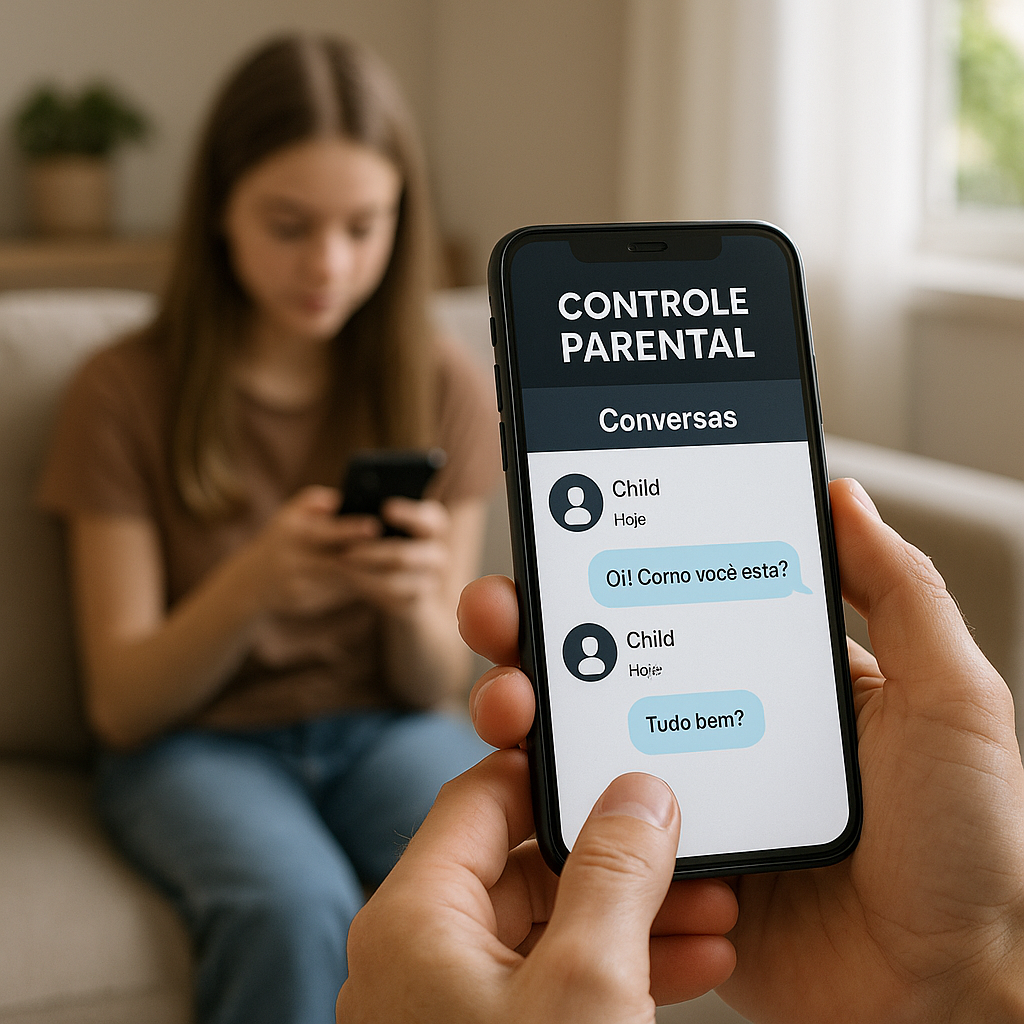
Be prepared to adjust your strategies as your child grows. You can relax certain restrictions progressively, showing that you trust responsible behaviors.This natural evolution creates healthy independence and reduces the need for extreme monitoring.
Differentiating between protection and excessive control
The line between protecting and controlling is fine, but important. You should monitor to maintain safety, not to control every aspect of your child’s social life.If you’re reading every personal conversation or preventing every new friendship, you’re probably being overly invasive.
Healthy parental control signals include: you have automatic alerts for dangerous situations, intervene only when necessary, and maintain open communication about security. You also recognize that teens need privacy and allow space for controlled error.A conversation app with parental control should be a prevention tool, not a full surveillance tool.
Consider that you are preparing your child for a world where he will soon have no external monitoring. The real goal is to teach him to surf the internet responsibly, not just ensure that he does nothing wrong under supervision.
Mutual respect is the foundation of any successful parental control strategy.You gain more confidence by being honest about boundaries than being secretive about monitoring.Children who know they are monitored properly often develop safer digital habits than those watched in secret.
Best practices for choosing your parental control app
You should research independent user reviews before any purchase.Search for real feedback on usability, effectiveness and customer support.Popular apps are not necessarily the best for your specific situation, so compare options and read parent-child experiences in the same age group.
Make sure the app offers a free trial or trial period. You need to try the interface, understand how monitoring works, and evaluate whether it really meets your needs before paying. A good app offers transparency on costs, available features, and restrictions.
Make sure the app is legal and ethical in your country. You need to check that monitoring is permitted by law and that it complies with regulations on child data protection. Reputable apps always clearly state their privacy practices and regulatory compliance.
Look for platforms that offer educational support for parents.You will benefit from guides, tutorials, and advice on how to interpret data and act appropriately. Apps that also educate about digital security are more likely to be effective in the long run because they create awareness throughout the family.
Consider the cost-effectiveness of different options.You can find free apps with basic functionality or pay for premium services with advanced features.Assessing your specific need helps you not to spend unnecessarily or, on the contrary, not to save on important features.
Continuous communication as a complement to monitoring
Genuine communication is just as important as any parental control app. Establish routines where your child feels comfortable sharing about their online interactions, conflicts they face, and people they meet over the internet.
Educate your child about specific risks like sexting, sharing personal information, and accepting requests from strangers. You increase protection when you create awareness about hazards rather than just implementing technical barriers.Informed children make better decisions, even when no one is monitoring.
Build an environment where your child feels safe from telling about problems.If he receives an inappropriate message or feels harassed, you want him to tell you, not hide it. The more open the communication, the more effective any parental control system becomes.
You should review your strategies periodically with your child, asking for feedback on what works and what does not. This collaboration makes the process less adversarial and more focused on mutual protection. Children who participate in the decision on monitoring tend to cooperate more than those subjected to arbitrary rules.