Car Scanner App: Full Diagnosis
Announcements
A car scanner app has become essential for owners who want to understand the health of the vehicle without visiting a workshop. This tool diagnoses problems in the engine, transmission and electronic systems in a few seconds.
Announcements
Automotive scanning technology has evolved significantly in recent years, allowing you to access information that was once unique to professional mechanics.With a smartphone and the right app, you gain autonomy, savings and peace of mind to make important maintenance decisions.
What is a Car Scanner App and How It Works
A car scanner app is software installed on your smartphone that connects to the vehicle’s on-board computer via an OBD-II (On-Board Diagnostics) adapter. This adapter translates the car’s electronic information into readable data that the application displays on your screen. The process is fast, secure and does not cause any damage to the car’s electronic system.
Operation is based on reading the error codes stored by the electronic power station of your car. When something fails in the engine, gearbox or sensors, the system generates a specific code (such as P0101 or P0300) that the scanner identifies and translates into clear language. You immediately find out if you are facing a simple problem, such as a poorly regulated valve, or something more serious that requires immediate repair.
Main Features of an Automotive Scanner
A good scanner app offers multiple tools that go beyond simply reading error codes.You can monitor real-time parameters such as engine temperature, battery voltage, oil pressure and fuel consumption accurately. These data help identify inefficiencies and abnormal vehicle behaviors before they cause major damage.
The error history functionality is especially valuable when you buy a used car. The scanner shows all the problems that have been detected and erased over time, revealing whether the vehicle has actually received proper maintenance.Many apps include the ability to erase error codes after solving the problem, eliminate maintenance warnings, and even calibrate specific sensors without needing professional equipment.
Real Scenarios of Automotive Scanner Use
Imagine that you are driving and the engine check light turns on unexpectedly. With an app scanner, you do not need to panic or immediately look for an expensive workshop. You park, use the application to identify that it is just a loose oxygen sensor and learn to tighten yourself, saving hundreds of dollars in diagnosis. This is a common scenario that demonstrates the practical power of this technology in everyday life.
Another real and frequent case involves used car sellers using scanners to check maintenance history before buying a vehicle at auction or from private individuals. An experienced seller can identify whether a car has received regular maintenance or has gone through negligence, changing its negotiation strategy and determining the fair price. The tool eliminates unpleasant surprises after purchase and allows you to negotiate with confidence.
Commercial fleet owners also benefit enormously from the scanner.A manager can use the app to quickly check the status of multiple vehicles before they leave for deliveries, identifying minor issues that could impair operational efficiency.If a vehicle experiences speed sensor failure, for example, the scanner points this out immediately, allowing you to remove the car from the route or schedule preventive maintenance.
A particularly interesting scenario occurs with owners who make modifications to the engine.These enthusiasts use the scanner to monitor advanced parameters such as air quantity, fuel pressure and ignition angle during performance tests.This ensures that modifications do not exceed safe limits and helps optimize yield within controlled parameters.
Practical Advantages and Benefits
Financial savings is the most immediate advantage of owning an app scanner. You avoid unnecessary professional diagnostics that cost between $ 150 and $ 500 at a time, especially when the problem is simple. An owner who uses the scanner regularly easily saves a few thousand dollars over the life of the vehicle. In addition, you identify problems early prevents much more expensive emergency repairs that arise when minor failures are ignored.
Autonomy is another fundamental benefit you gain. You no longer depend on the opinion of a mechanic who may have incentives to suggest unnecessary repairs or simply have no interest in solving the problem transparently. With technical information in your hand, you can research, compare budgets and even decide to perform simple repairs yourself, establishing full control over your vehicle.
Preventive monitoring offered by the scanner extends the life of your car. You identify component degradation before they fail completely, allowing planned replacements instead of emergency.The battery that is weakening, the sensor that is starting to fail or the oil that needs preventive change – everything is visible through the data captured by the application.
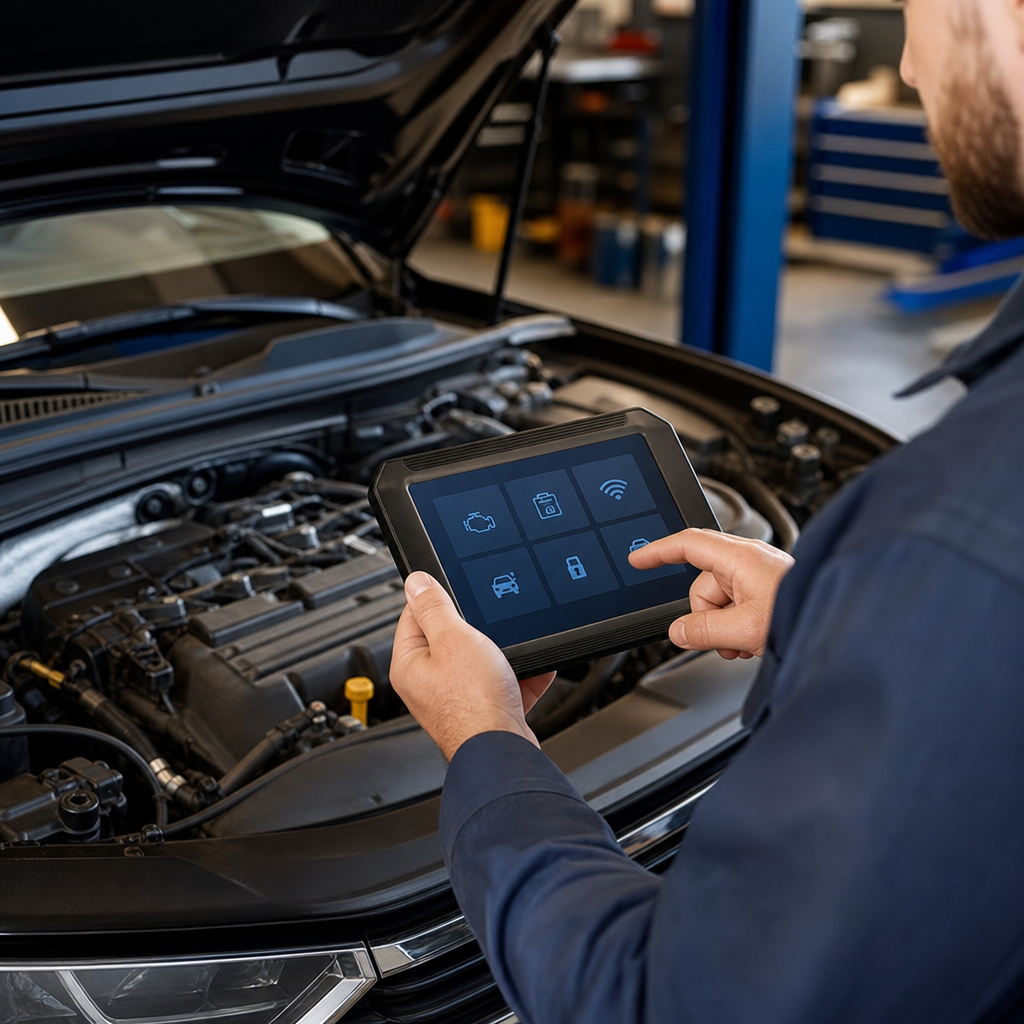
For buyers of used cars, the scanner offers unmatched security at the time of purchase.You examine the complete history of errors, get clear photo of the electronic state of the vehicle and avoid buying a “cat per hare”. This information is especially valuable in private transactions where there is no guarantee of dealership, putting you in a much more advantageous position in trading.
Choosing the Best App Scanner for Your Needs
The market offers several options of apps and adapters for different needs and budgets. The basic models focus on reading error codes and erasure, costing between R $ 50 and R $ 200, working well for occasional users who want to solve specific problems. The intermediate scanners add real-time monitoring, Bluetooth integration and more detailed analysis, priced between R $ 200 and R $ 500, being ideal for owners who want regular preventive maintenance.
Professional scanners cost over $500 and offer access to advanced data, module coding, actuator testing, and compatibility with multiple makes and models. These are only required if you work with cars professionally or have specific vehicles with complex diagnostic needs. Choose based on your expected usage, diagnostic frequency, and compatibility with the car models you own or plan to own.
Compatibility is critical factor in choosing. Not all apps work with all adapters or car brands, so you should check before buying. Read user reviews with the same vehicle model, confirm the support of your smartphone’s operating system and test with trial version if available. An excellent app that does not work with your car is completely useless, so this check is non-negotiable.
Limitations and Important Considerations
An app scanner does not replace a full professional review when the car has severe symptoms. The app reads only electronic error codes and digital parameters, not detecting pure mechanical problems such as insert wear, expired fluids or structural deformations.If you hear strange noises, feel vibrations or note leaks, the scanner can help with the electronics, but a qualified mechanic needs to physically inspect the vehicle.
The quality of the data also depends on the OBD-II adapter you use. Low-quality adapters provide inaccurate or unstable readings, creating false confidence in incorrect diagnoses. Invest in a reliable adapter of a recognized brand, even if it costs a little more, because a wrong diagnosis is worse than no diagnosis. The Bluetooth connection must be stable, the minimum latency and the appropriate range to operate inside your car without interruptions.
Some error codes are quite generic and require additional investigation to identify the root cause. For example, a “misfire” code (ignition failure) may be caused by worn spark plug, faulty ignition coil, contaminated fuel, or bad oxygen sensor. The scanner identifies the symptom, but you need technical knowledge or professional consultation to determine exactly which component is failing.
Scanner Integration with Regular Maintenance
The most effective strategy is to use the scanner app as a complement to scheduled maintenance, not as a replacement. You maintain the schedule of oil changes, filters and inspections, but the scanner provides extra visibility between these maintenance. This combination allows you to identify emerging problems quickly and schedule services efficiently, avoiding both negligence and unnecessary maintenance.
Many prudent owners use the scanner monthly to monitor key parameters such as battery voltage, engine temperature, fuel consumption and air-fuel mixture quality. This continuous surveillance reveals negative trends before problems manifest through obvious symptoms. Early detected gradual degradation allows repair planning, while the same ignored failure can lead to breakdown in hazardous locations or inconvenient situations.
For older vehicles, the scanner becomes even more valuable as a prevention tool. Older cars are more prone to electronic failures, corrosion in sensors and component degradation, making frequent monitoring absolutely essential. Classic or older vehicle owners often report that the scanner was the best investment to extend the life of the car and maintain reliability on long journeys.
Future Trends and Technology Evolution
Automotive scanning technology evolves rapidly, with increasingly sophisticated apps integrating artificial intelligence to predict failures before they occur.The near future will bring predictive analytics that estimate how long a component will last based on usage patterns, allowing for even more accurate maintenance planning.
Connectivity will also evolve significantly, with scanners integrated directly into the telematic systems of modern cars, eliminating the need for separate physical adapters.You will be able to access complete diagnostics through the car infotainment itself or an integrated vehicle application.For older cars, wireless and longer-range adapters will become standard, improving the overall user experience and increasing the accessibility of this technology to the general public.