Free App to Discover Your Past Life
Announcements
You’ve probably seen advertisements for apps that promise to reveal details about your past lives. These apps have attracted millions of curious users around the world, but will they really work?This article will unravel the myths and truths about free apps that claim to discover your past life.
Announcements
Many people believe that a simple app can access cosmic information about reincarnations and previous stories.The truth is more complex and requires careful analysis of what these apps actually offer, how their technologies work and what realistic expectations you should have when downloading them.
Myth: Apps Read Cosmic Energies and Reincarnationist Information
One of the biggest myths about these apps is that they can capture cosmic energies or access akashic records through your smartphone. This is simply not technically possible with the features that a mobile phone has. No app, no matter how sophisticated, can literally connect you to supernatural or cosmic information, as this contradicts the laws of physics and the operating mechanisms of conventional electronic devices.
What these apps actually do is use algorithms based on data you voluntarily provide. When you enter your name, date of birth and other personal information, the app processes this data through pre-programmed numerological, astrological or psychological databases.
Truth: Apps Use Custom Data and Algorithms
The truth is that free apps that promise to discover your past life work through data-driven personalization systems.They collect information about you such as name, date of birth, zodiac sign, and other personal characteristics to generate customized results.These results can seem remarkably accurate because they use well-known techniques of analysis and symbolic interpretation that work for almost anyone.
Many of these apps integrate elements of astrology, numerology, digital tarot and popular psychology to create engaging narratives about possible past lives. The algorithms were developed specifically to produce interpretations that resonate with most people, using generalization techniques that work similarly to the Barnum effect.
Myth: The Better the App, the More Accurate the Result
Many users believe that apps with more beautiful interfaces, more downloads or more five-star ratings have more accurate methodologies for discovering past lives. This assumption is incorrect because the visual quality or popularity of an app is not related to its ability to access truly mystical or supernatural information. A visually stunning app uses the same basic principles as a simple app: data collection and algorithmic processing.
The rating of an app primarily reflects its user experience, pleasant interface and ability to entertain, not its accuracy in revealing previous lives. You can download one app with 4.9 stars and another with 3.5 stars, and both will use basically the same kind of behind-the-scenes data processing. What changes is how the information is presented visually and how well the app keeps you engaged and coming back for more readings.
Truth: There Are Real Benefits to Using These Apps, Even If They’re Not Supernatural
While these apps may not actually reveal your past lives, they offer genuine psychological benefits worth considering. Using an app of this type can help you reflect on your values, fears, dreams, and behavioral patterns through a different lens.The process of entering personal data and receiving a narrative about who you might have been in the past can stimulate deep self-reflection.
Many people find value in using these apps as tools for meditation, self-knowledge, or simply as a fun way to spend time. If you get a reading about a past life as a brave warrior, it can inspire you to behave more bravely in your current life. If reading describes you as a compassionate healer, it can reinforce your willingness to help others.
Myth: Free Apps Are Less Effective Than Paid Versions
There is a widespread belief that paid or premium apps offer more accurate revelations about past lives than their free counterparts.This is a common marketing strategy in apps of this category, but the reality is that both versions use fundamentally the same algorithms and content generation mechanisms.The premium version often offers more readings, fewer ads, or additional functionality such as more detailed graphics, but no access to genuinely superior cosmic information.
App developers know that many users are willing to pay for content that seems more unique or in-depth, so they create subscription tiers that promise more powerful insights.However, the underlying technology remains the same.If an algorithm cannot access true past-life information in the free version, it will also not be able to do so in the paid version, regardless of how well presented the information is.
Truth: You Should Understand How Your Data Is Used in These Apps
An important truth you need to know is that these apps collect significant personal data about you, and it is essential to understand how this information will be stored and used. When you download an app that discovers your past life, you are providing name, date of birth, location, and other personal characteristics to a remote server.Many of these apps use this data for the purposes of targeted advertising, selling to third parties, or behavioral analysis.
You should always read the privacy policy before registering for any app, even if it sounds simple or fun. Some free apps monetize their users by selling demographically rich data to marketing agencies or consumer profilers. Others may use your information to train artificial intelligence algorithms or simply to collect statistics on human behavior patterns.Being aware of this allows you to make informed decisions about how much of your personal information you are willing to share in exchange for an entertaining reading about a past life.
Myth: These Apps Replace Professional Consulting or Therapy
Some people treat past-life app readings as if they were professional or psychological advice that should guide important life decisions.This is a significant mistake because an app algorithm, no matter how sophisticated, cannot replace the guidance of a qualified therapist, counselor, or mental health professional.If you are experiencing severe emotional, behavioral, or psychological problems, an app will never be the appropriate solution.
It is important to keep a clear perspective on the purpose and limits of these apps.They are entertainment and reflection tools, not diagnostic or treatment tools.If a reading about your past life helps you think about yourself differently, this is great, but you should not make bigger decisions about health, relationships or career based solely on what an app said about who you were in previous lives.
Truth: The Psychology Behind Apps Explains Your Appeal
Understanding why these apps are so popular requires knowledge about basic human psychology and cognition. People are naturally drawn to narratives that put them at the center of an interesting story, especially stories that suggest they have cosmic importance or spiritual purpose.An app that says “you were a legendary warrior in 1247 AD” is psychologically satisfying because it validates your existence in a larger, more meaningful context.
In addition, the human brain is excellent at recognizing patterns and finding meaning, even in random or loosely related information. This feature, combined with our innate desire to understand ourselves and our place in the universe, makes these apps especially appealing. The app does not really need to access cosmic data to look fascinating when you are already psychologically prepared to accept and appreciate your message.
Myth: OteApp Is Different Because It Uses Advanced Technology
If you’ve researched apps to discover past lives, you may have found the OteApp mentioned as a sophisticated option that uses “advanced technology” or “edge artificial intelligence” to reveal information about reincarnations.The reality is that OteApp, like any other app in this category, operates on the same fundamental principles: collecting user personal data and processing through pre-programmed algorithms. The language about advanced technology is mainly marketing language to make the app look more credible and scientific.
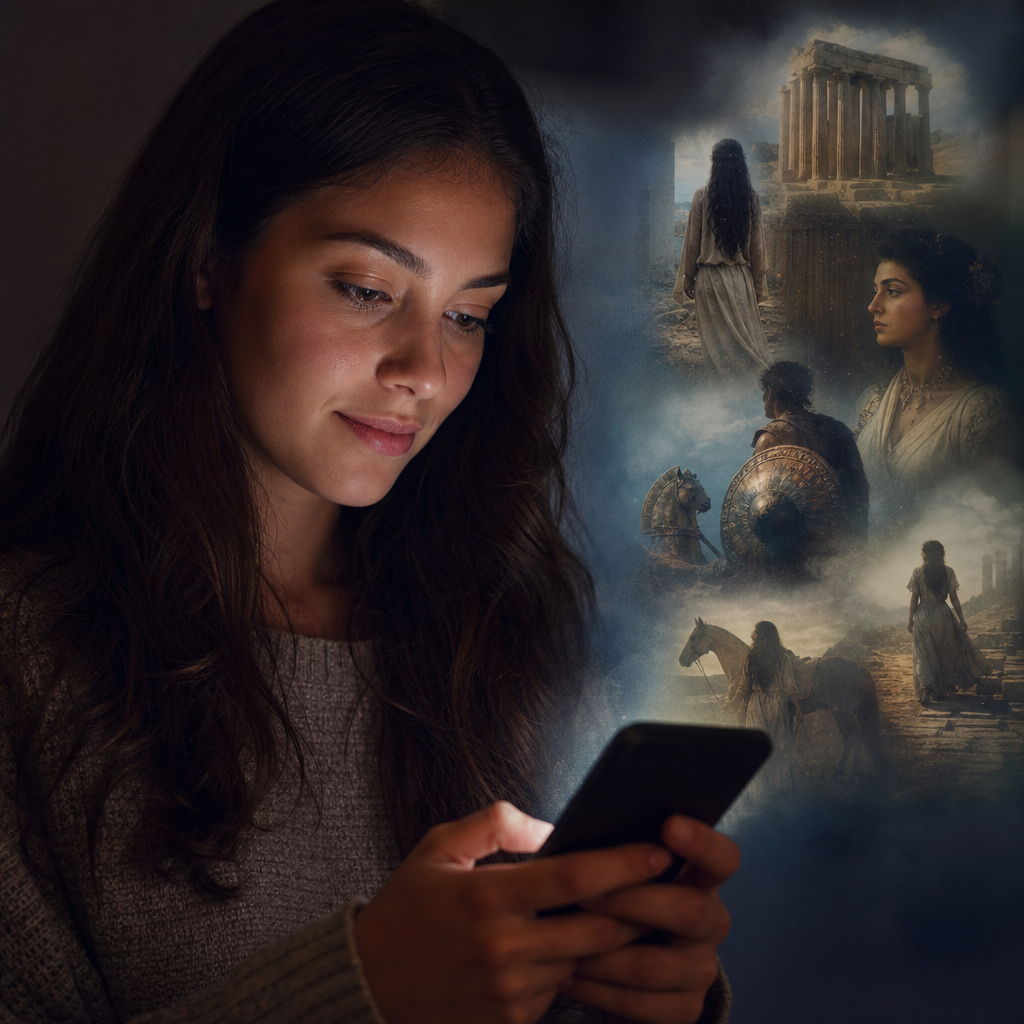
OteApp may have a more modern interface, better graphics or more built-in features, but that doesn’t change the basic nature of what it does. If you use OteApp, you’ll get a personalized read on a possible past life that will be generated through mathematical algorithms, not through any true access to spiritual dimensions. This doesn’t mean that the experience isn’t worth it, just that you should have realistic expectations about what’s really going on behind the visual interface.
Truth: OteApp Is Transparent About How It Works, If You Look
A positive feature of OteApp is that the company is relatively open about the methods behind its algorithms when you search for information.If you examine the support section or frequently asked questions of the application, you will find explanations about how it uses numerology, astrology and behavioral pattern analysis to generate its readings about past lives.
OteApp does not intend to mislead you by saying that it is literally accessing reincarnation records through psychic powers. Instead, it positions your readings as artistic and reflective interpretations based on data you provide. This honesty makes OteApp a more responsible choice compared to apps that make false claims about genuine supernatural capabilities.When you use OteApp, you are signing an implied contract that says: “I will have fun with this and reflect on what it means, without believing it to be literally true”.
Myth: OteApp Readings Are Different For Every Person
You may believe that OteApp and similar applications generate completely unique readings for each person based on their unique data. Although the readings are customized in relation to their name and date of birth, they are generated from a finite set of narrative templates that are combined and adapted.OteApp is not creating a new narrative from scratch; it is selecting and modifying pre-written stories about past lives based on specific parameters.
If two people have the same sun sign, for example, they will share significant elements in their OteApp readings, even if their names and birth dates are different. The algorithm weighs certain astrological and numerological factors more heavily than others, so people with similar profiles are given similar narratives with small custom variations.This does not mean that the readings are not valuable for reflection; it just means that they are not as unique as you might initially imagine.
Truth: OteApp Offers a Legitimate Type of Self-Exploitation
Although OteApp does not reveal your real past life through psychic powers, it does offer a legitimate platform for self-exploration and creative thinking about your identity.When you receive a reading about how you could have lived in a different era or a different role in society, it functions as a psychological mirror that helps you reflect on who you are now.
Thinking about yourself through the lens of an imaginary past life can be surprisingly liberating. If OteApp says you were a free artist in a previous life, it may encourage you to explore your creativity in this life. If it says you were a wise leader, it can reinforce your confidence in situations where you need to make important decisions.The psychological effectiveness of using OteApp or any similar app does not depend on the content being literally true; it depends on how you choose to integrate this narrative into your understanding of yourself.
Myth: You Can Trust One Read from OteApp
Some users develop an unhealthy relationship with apps like OteApp, constantly going back to new readings and treating each new result as if it were a new revealed truth about their past life. This approach is problematic because the results vary slightly each time you request a new read, and a change in the variables you enter can result in a completely different narrative.If you use OteApp multiple times with slightly different information, you may receive contradictory stories about who you were in the past.
It is important not to develop psychological dependence on app readings for personal validation or life guidance. If you find yourself constantly thinking about your OteApp reading or changing your behaviors significantly based on it, it may be time to reconsider how you are using the app. These tools work best when used occasionally for fun and superficial reflection, not when they become the center of your identity or self-understanding.
Truth: The Past Life App Market Is Growing For A Reason
The fact that apps like OteApp and many competitors are gaining users in increasing numbers is no coincidence; it reflects a real, deep human tendency.People want to understand themselves on a deeper level and want to feel that their existence has meaning and purpose.In a world that often feels chaotic and impersonal, the narrative that you have lived multiple meaningful lives is psychologically comforting.
This growth also reflects our current cultural moment, where people are seeking meaning outside of traditional structures like institutionalized religion or work or family-based identities. Apps that explore reincarnation, astrology, and personal spirituality fill a psychological gap for many people.The proliferation of these apps does not prove that they work supernaturally, but demonstrates that they fulfill a genuine human need for storytelling, meaning, and self-exploration.
Myth: Discovering Your Past Life Answers Questions About Your Present
There is a belief that if you really understand who you were in previous lives, you will understand why certain things happen to you now or why you have certain fears and desires. This premise is appealing because it promises simple answers to complex psychological questions.However, no application, no sophisticated as it is, can really connect the dots between an imaginary past life and its present problems in a way that is more meaningful than real psychology and therapy can offer.
The real causes of your behaviors, fears, and relational patterns are rooted in your personal history in this life, your family environment, your traumas, and experiences. An app that says “you were afraid of water in a past life, so this explains why you fear pools now” is offering an explanation that you cannot verify and that probably masks the real cause of your fear. If you really want to understand and resolve problematic behavioral patterns, you will need honest reflection, possible professional therapy, and not algorithmically generated past-life narratives.
Truth: The Experience of Using a Past Lives App Is Valid Regardless of Literal Truth
After considering all the myths and truths about apps that discover past lives, an important conclusion emerges: the experience of using these apps can be genuinely meaningful even if they are not literally accurate. You can download OteApp or another similar app, receive a reading about a possible past life, and find real value in this experience without believing that the app has real supernatural powers.
The key is to maintain a balanced and lucid relationship with these tools. Use them for fun, reflection and self-exploration, but not as a primary source of psychological guidance or personal validation.Acknowledge that you are participating in a type of collaborative creativity where the app provides a narrative and you provide the personal interpretation that makes it meaningful. This type of conscious engagement with technology in a playful but reflective way is not only acceptable, but can be psychologically beneficial when done with emotional intelligence and a clear understanding of what is actually happening.
Myth: There Are Scientific Validations for These Apps
You may have seen claims that scientists or researchers have validated the accuracy of applications such as OteApp or similar techniques for discovering past lives. These claims are false, and no serious scientific institution endorses the idea that a mobile app can reveal reincarnations or past lives.The scientific community has found no reliable evidence for reincarnation, let alone for the ability of computer algorithms to access this information if it existed.
When you see claims about scientific validation, they often come from unreliable sources or are distortions of real facts. For example, an app developer may cite studies on the psychological benefits of storytelling or astrology as entertainment, but these are not validations that the app actually reveals past lives. It is important to develop critical literacy about scientific claims, especially when they come from entities that have a financial interest in you believing their claims.
Maintaining a respectful but skeptical attitude toward apps that discover past lives is the healthiest approach.You can appreciate these apps as tools for entertainment, personal reflection, and creative exploration while maintaining a clear understanding that they are not based on science or real access to cosmic information.This combination of fun engagement with lucid critical thinking is the middle way that allows you to enjoy the best of these apps while avoiding their potential pitfalls.