Digital Tape: Precise and Fast Measurements
Announcements
Digital tape measure has transformed the way you take measurements in personal and professional projects.With laser or ultrasonic technology, these devices offer millimeter precision and speed that conventional tapes have never been able to deliver.
Announcements
Whether you work in construction, interior design, furniture or simply need to measure spaces reliably, understanding the advances and trends in digital meters is critical to making better decisions.This article uncovers the best practices and innovations that are shaping the digital measurement market in 2024.
What is a Digital Tape and How It Works
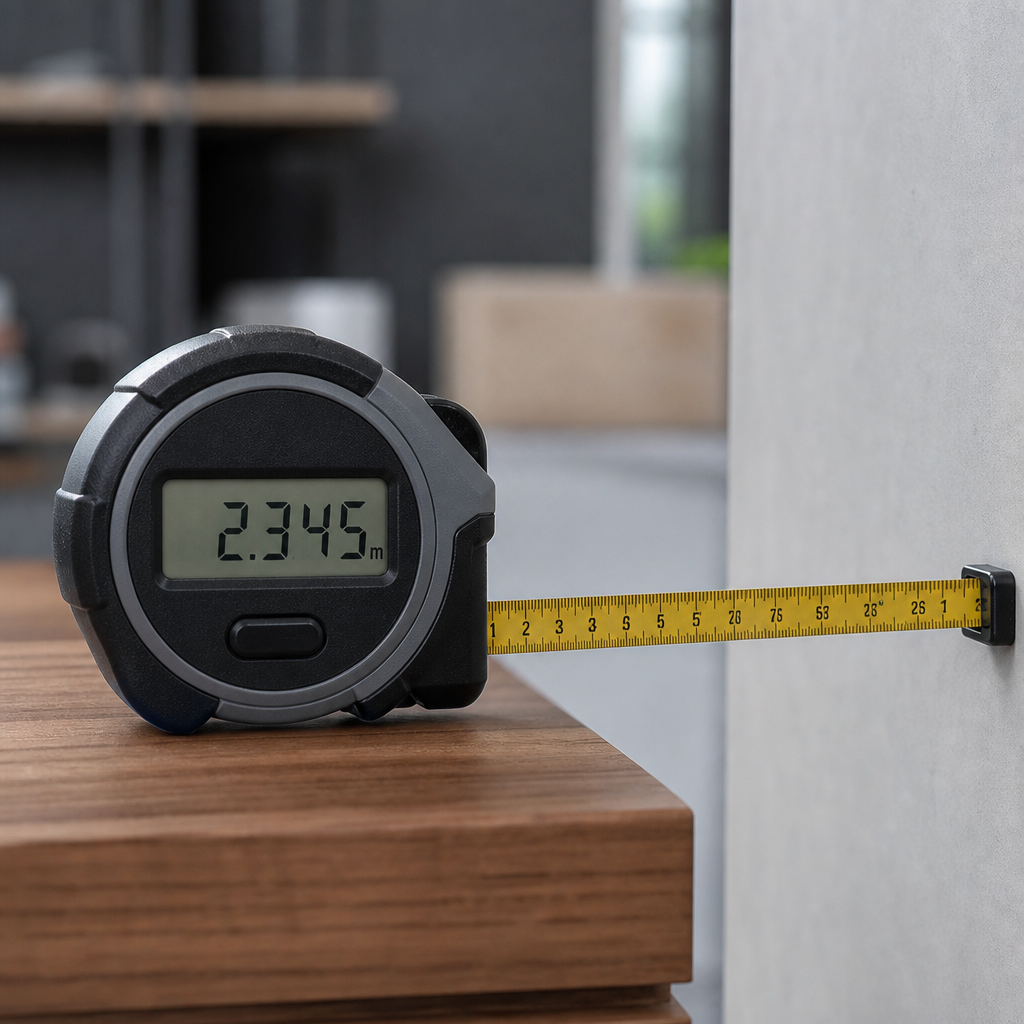
A digital tape measure is a compact electronic device that uses laser, ultrasonic or optical sensor technology to calculate distances with extreme precision. Unlike conventional tapes, you point the meter to the starting point, then to the end point, and the equipment provides the exact measurement in fractions of a second. Most modern models display results in centimeters or inches, with an option of automatic conversion between units.
Laser technology is currently the most popular and reliable for professional use, as it can reach distances of up to 100 meters with error margin less than 2 millimeters. You press a button, the device emits an invisible laser pulse, which bounces off the target object and returns to the sensor, calculating the elapsed time to determine the exact distance.This speed of calculation eliminates human errors caused by tremors, lack of alignment or reading difficulty, common problems with traditional tapes.
Current Trends in Digital Laser Meters
The digital tape measure market is evolving rapidly, and the 2024 trends point to greater integration with mobile technology and artificial intelligence. Many manufacturers now develop applications that connect via Bluetooth to the meter, allowing you to store, organize and share measurements directly on your smartphone. This approach facilitates project documentation and team collaboration, reducing manual annotation time and risk of data loss.
Another important move is the incorporation of cameras and augmented reality features into premium meters.You can visualize the measurements superimposed on the camera image, which speeds up space planning and helps in communicating with customers, especially in interior design.These features ensure that furniture or layout decisions are made based on real data, not inaccurate visual estimates.
Practical Advantages of Digital Tapes
Speed is perhaps the most obvious and valued advantage by professionals. A measurement that would take 3 or 4 minutes with conventional tape (including alignment, careful reading and annotation) is performed in less than 1 second with laser meter. If you need to measure 50 rooms of a property for report, report or project, the time savings are extraordinary and reduces mental and physical fatigue of the operator.
Accuracy is another critical difference that directly impacts the final result of your work. Digital meters eliminate deviations caused by tape curvature, lack of alignment or difficulty reading in small numbers. For woodworking, construction or renovation projects, errors from 5 to 10 millimeters can mean costly rework. With ±2mm accuracy in quality meters, you avoid these problems and gain confidence in the quality of delivery.
Ergonomics is also a significant benefit that you will notice quickly.Conventional metric tapes require two people to keep the instrument aligned and tense, or a person to use pre-tension techniques that cause discomfort and errors. A laser meter allows you to work alone without excessive physical effort, especially useful when measuring heights, distances on walls or spaces that are difficult to access. This feature makes work less tiring and safer.
Advanced Features You Should Know
Modern digital meters go far beyond simple distance measurement.Most professional models include automatic calculation of area and volume, which is extremely useful if you work with floor covering, coatings or buying materials.You measure length and width, and the device calculates square footage instantly, eliminating errors of mental multiplication or with calculator.
Memory functions allow you to store multiple measurements for further analysis and comparison. If you are evaluating two environments to define amount of ink or coating, you can save the dimensions of each and consult them later. This functionality is especially valuable in meetings with customers, when you need to justify proposals and budgets based on data collected in the field.
Some advanced models include integrated bubble level, which makes it easy to align objects or check verticality without the need for additional tools. This combination of functions in a single device reduces the number of tools you need to carry, making work more practical and efficient. For interior design professionals or architects, this feature saves considerable time during survey visits.
Best Practices for Using Digital Tape with Maximum Efficiency
The first essential practice is regular calibration of your digital meter. Even high quality equipment can experience deviations over time, especially if exposed to extreme temperatures or accidental drops. You should check the monthly calibration if you use the device daily, and at least every quarter in occasional use. Many manufacturers offer certified calibration services that ensure traceability and reliability of the data.
Knowing the limitations of your equipment is equally important to avoid inaccurate measurements.Laser meters may have difficulty on reflective, transparent or very dark surfaces, as the laser pulse does not return correctly.You should learn to identify these situations and, when necessary, use conventional tape as a backup or apply alternative techniques, such as using a white tape or reflective glue on the surface to improve signal capture.
Organization of collected data is an often neglected practice but fundamental to maximize value of measurements. If you work with application connected to the meter, create a folder system by customer, project or date, facilitating location and subsequent analysis. This discipline turns your digital meters into a project management tool, not just data collection, increasing reliability and professionalism of your operation.
Differences Between Technologies: Laser vs Ultrasonic
Laser meters are predominant in the professional market due to superior range and exceptional accuracy.You can measure from 1 meter to 100+ meters depending on the model, with consistent error margin of ±2mm. However, laser does not work well under very intense direct sunlight, because the optical signal is lost in clarity, and requires clear vision between origin and destination point.For indoor work in offices, homes or commercial, laser is practically indispensable.
Ultrasonic meters use sound waves to calculate distance, working well up to 10 meters with accuracy of ±5cm. Although less accurate than laser, ultrasound has the advantage of working through semi-transparent objects and not being affected by sunlight. For fast and approximate measurements in open environments or with partial obstacles, ultrasound offers good cost-benefit. You should choose technology based on the context of use: laser for indoor precision work, ultrasound for approximate external surveys.
Hybrid meters are emerging in the market, combining laser and ultrasound to offer maximum flexibility.You can switch between the two modes according to the situation, obtaining better performance in different scenarios. These equipment cost more, but for professionals working in varied environments, versatility justifies the additional investment.
Software Integration and Professional Workflow
The digital revolution in measurement is not limited to hardware, but extends to software and integration with existing workflows. You can export measurements to standard formats such as PDF or CSV, making it easy to import into design, budgeting or project management software. This integration reduces manual data re-entry, eliminates transcription errors and speeds up your project’s production cycle.
Cloud platforms are transforming collaboration into projects that involve multiple professionals.Whether you work as a team with architects, engineers or vendors, you can share real-time measurements through the cloud, allowing everyone to track progress and make decisions based on up-to-date data.
Automated reports are another growing trend in 2024. Connected digital meters can generate automatically formatted reports, with images of space, dimensions, area and volume calculations, and even estimates of material required. You save hours of typing and produce more professional and reliable documents, impressing customers and differentiating your service from the competition.
Selection and Investment in Digital Meters
Choosing the right digital meter depends primarily on your volume of use and type of work. If you do few projects a year and are starting, a basic 50 meter laser meter with ±3mm accuracy costing between R$200 and R$500 is sufficient and offers great return. As your needs grow and you require features such as area calculation, data memory or connectivity, you should consider semi-professional models in the range of R$500 to R$1,500.
Professionals who work daily with measurement should invest in top-of-the-line equipment, with precision ±2mm, range of 100+ meters, Bluetooth, integrated camera and long battery life. These meters cost between R $ 1,500 and R $ 5,000, but offer durability, reliability and features that justify the price through time savings and quality improvement. Consider the average service life of 5 to 7 years to amortize the investment.
Warranty and technical support are often overlooked but critical factors for professionals. You should opt for recognized brands that offer a minimum warranty of 2 years, with the possibility of certified calibration and spare parts available.Smaller manufacturers may present attractive price, but application compatibility problems or difficulty in maintenance can make their professional use unfeasible in the medium term.
Use Cases and Practical Applications
In construction, digital meters are used for surveying structures, checking compliance with projects and documentation of work. You can measure openings, ceiling height, alignment of walls and even concrete volumes quickly that allows you to complete complete multi-storey building survey in a week, versus 2 to 3 weeks with traditional methods. This efficiency reduces staff mobilization costs and speeds up decision making in case of project disagreements.
Interior design is another area that benefits enormously from digital meters.You can measure customer environments present, view dimensions in real time through augmented camera, and propose furniture layouts with confidence that the parts will fit correctly. This approach eliminates unpleasant surprises after furniture purchase, reduces returns rate and increases customer satisfaction significantly.
Real estate agents and appraisers use digital meters to accurately document properties, generating reports with correct footage that support market evaluations. You can measure land, front and funds, calculate total area and identify discrepancies between legal documentation and physical reality, avoiding future conflicts between buyer and seller. This professional practice has become standard in quality real estate.
Maintenance and Durability of Digital Meters
Preventive maintenance extends the life of your digital meter and ensures consistent accuracy over the years. You should clean laser lens regularly with soft and dry cloth, avoiding liquids or abrasives that damage the optical sensor. Battery should be changed as recommended by the manufacturer, not leaving the equipment on for periods of non-use, as this drains battery and can cause leakage of acid that damages internal circuit.
Fall and impact protection is equally important for maintaining accuracy. You should use a suitable hard case when transporting the meter, avoiding storing it next to heavy tools or objects that may hit the equipment. Some professionals invest in a bracelet or seat belt to avoid accidental falls during work at height, a practice recommended especially when measuring ceilings or high structures.
Proper storage protects your equipment from extreme temperature and humidity variations that can affect calibration. You should store the meter in a dry place, with a temperature between 10°C and 50°C, away from sources of direct heat or excessive humidity. If your work takes place in humid environments such as basements or outdoor areas with frequent rain, consider models with waterproof seal, although they cost more.
Realistic Challenges and Limitations
Despite significant advances, digital meters still face limitations that you should know to avoid frustration. Very reflective surfaces such as mirrors or mirrored glass can cause duplicate reading of the laser signal, resulting in wrong measurements.You should recognize this situation by displaying inconsistent or flowing value on the display, and adjust meter position or use conventional tape in this case.
Limited outdoor reach with direct sunlight is an important practical challenge for terrain or facade measurement jobs on clear days. You can solve this by using anti-glare screen protector, measuring at times with lower solar incidence, or simply resorting to conventional tape measure as a quick alternative. Knowing these limitations and having tool backup makes you more versatile and professional.
Higher initial cost compared to conventional tape can be a barrier for beginners or professionals with a restricted budget. You should make return investment analysis considering workload, time savings, and reduction of errors. For professionals who perform more than 3 projects monthly, the investment is paid in less than 6 months through time savings and quality improvement.
Future Trends and Innovations in Development
Artificial intelligence is starting to appear in premium digital meters, allowing automatic object recognition and calculation of dimensions of multiple parts in sequence. You point to a wall with multiple openings, and the system identifies windows, doors and walls automatically, generating full report without the need for individual pointing. This innovation promises to reduce lifting time by half in specific applications.
Integration with drones and 3D scanning systems is opening up possibilities for measuring complex structures and very large environments.You can capture cloud of 3D points of entire building, extracting any measurement needed without needing to return to the field. This technology is still expensive, but costs are falling quickly, making it feasible for medium to large professionals in the next 2 to 3 years.
Open standards for data integration are being developed to allow compatibility between different meters and third-party software. You will not be stuck in the ecosystem of a single manufacturer, but you will be able to choose better tool for each situation and integrate data smoothly. This trend favors users and professionals, reducing costs of adopting new technology and increasing innovation in supporting software.