Car Scanner App: Diagnose Your Vehicle
Announcements
Have you ever stopped to think about how practical it would be to diagnose your car problems without leaving home? Vehicle scanners applications promise just that, but not everything you hear about them is true.
Announcements
There are many myths circulating about these digital tools, from claims that they completely replace a mechanic to rumors that they do not work in any situation.The reality, however, is much more nuanced and depends on how you use the technology.
What does a car scanner app really do
An application scanner works as an intermediary between your smartphone and the on-board computer of the vehicle. It connects through an OBD-II (On-Board Diagnostic) port, present in virtually all cars manufactured after 1996, and reads the fault codes stored in the system. This means that the app can access information about the engine, transmission, emission system and other electronic components.
The process is quite simple in practice. You buy a Bluetooth or WiFi OBD-II adapter (usually between R$ 50 and R$ 200), connect to your car, download the corresponding application and start scanning. The app then translates the technical codes into language accessible to the average user, explaining what each code means and what may be the cause of the problem.
However, readability varies greatly between applications. Some basic scanners can only read generic fault codes (P0000 to P0999), while more advanced ones access real-time information about engine speed, temperature, fuel consumption and more. OteApp, for example, offers an intuitive interface that allows both code reading and monitoring of vehicle parameters in real time.
Myth 1: The scanner app completely replaces a mechanic
A scanner can identify something is wrong, but it cannot tell exactly which part is faulty or how to fix it in many cases. Think about it: if the fault code indicates an oxygen sensor problem, the scanner can confirm that this sensor is malfunctioning, but it will not tell you if it needs cleaning, recalibration or replacement.
An experienced mechanic uses the scanner as a complementary tool, not as a final solution.It combines the fault code information with physical testing, visual inspection and accumulated technical knowledge. Therefore, using an app scanner does not exempt you from consulting a professional when more serious problems appear, especially if they involve safety systems such as brakes or steering.
The real advantage of the scanner is in providing more accurate clues to the mechanic, saving diagnostic time and consequently reducing costs. You arrive with concrete information about the problem, instead of describing vague symptoms like “the car is making a strange noise”.
Myth 2: All scanners work the same
The quality, accuracy and functionality vary enormously between the different apps available. Some just show fault codes without any explanation, while others provide detailed history, performance charts and even personalized recommendations.The level of detailing also differs greatly from one app to another.
Premium apps often offer more features, such as reading manufacturer-specific codes (which are more detailed than generic ones), fault history with timestamps, and integration with accredited mechanics.Free or cheaper scanners are usually restricted to the basics: simple code reading and cleaning of fault data. Choosing the right app depends on your level of technical knowledge and the specific needs of your vehicle.
Not every OBD-II adapter works perfectly with all apps, and some work best with certain car models. Before you invest, it’s worth reading user reviews with the same vehicle you own to ensure that the app you choose will offer the data you really need.
Truth: An app scanner helps you identify problems in advance
Many automotive problems start small and gradually worsen. A scanner can detect these anomalies before they become severe, allowing you to perform preventive maintenance. For example, a sensor starting to fail generates code that may not cause noticeable symptoms right away, but that a scanner can pick up.
This early detection saves you from dangerous and costly situations. A small problem in the identified emission system is now much cheaper than letting the fault evolve until it damages the catalyst or the engine control unit. Applications that monitor in real time allow you to monitor the performance of the vehicle constantly, creating a data history that helps identify patterns and trends.
OteApp and the like also make it easy to follow up on preventive maintenance.You can regularly monitor parameters such as engine temperature, fuel pressure and how the injections work, setting a standard of normality for your car. When something deviates from this standard, you get the alert before it causes significant damage.
Myth 3: Scanners invade the privacy of your car
Some people fear that using an internet-connected scanner puts their car data at risk or that sensitive information is secretly collected. In fact, most serious apps operate within clear legal frameworks and their privacy policy is available for consultation before installation.
The data collected is usually limited to fault codes, technical vehicle parameters and location information when GPS is activated. Reputable applications do not collect personal data such as your home address, contacts or browsing history. Most of the information stored on the server serves to provide better reports and improve the service itself.
As a precaution, you should always check the permissions that the app requests before installing it. If a scanner asks for access to your contacts, messages or photos for no obvious reason, something is wrong. Use only applications from well-known developers, with good reviews and clarity about data collection. This basic care solves virtually all legitimate privacy concerns.
Truth: A scanner helps save money on maintenance
By identifying problems in advance and providing more accurate diagnostics, an app scanner significantly reduces your expenses with automotive maintenance. Instead of taking the car to the mechanic for haggling or vague symptoms, you arrive with concrete information that accelerates professional diagnosis.
In addition, problems detected early are always cheaper to solve. A worn clutch identified when it starts to fail comes out much cheaper than when it has already damaged the transmission disc. A malfunctioning sensor repaired immediately prevents cascading damage to the engine. These progressive savings justify the initial investment in a good scanner and its adapter.
You also save money by avoiding incorrect diagnoses.Less ethical or less experienced mechanics can point out nonexistent problems or make unnecessary exchanges. With scanner data in hand, you can question suspicious diagnoses and even seek second opinions with more confidence.This informational power is extremely valuable and puts you in a better negotiating position.
Myth 4: Anyone can fix their car using a scanner
Having information about the problem is not the same as knowing how to fix it. A P0500 fault code (speed sensor problem) can be read by any scanner app, but fixing it requires knowledge of automotive electronics, appropriate tools and access to vehicle components. Trying complex repairs without experience can damage your car permanently.
There are simple repairs that an attentive owner can do with the help of the scanner, such as cleaning a dirty air sensor or checking loose connections. However, this is the practical limit for most people. Any repair that involves welding, programming electronic components or recalibrating systems should be left to professionals. The scanner serves as information, not as a repair manual.
Appropriate use is to use the scanner app as a diagnostic tool to make informed decisions and talk better with your mechanic.Never as a substitute for formal technical training or hands-on experience.The responsibility for what to do with the information obtained remains yours, and hasty decisions can result in greater harm.
Truth: Apps scanners are affordable and practical for any owner
Nowadays, you do not have to be a technician or shell out hundreds of dollars in professional equipment to access diagnostic information of your car. A basic OBD-II adapter costs between R $ 50 and R $ 150, and many apps work for free or with freemium versions. This puts this technology within the reach of virtually any modern vehicle owner.
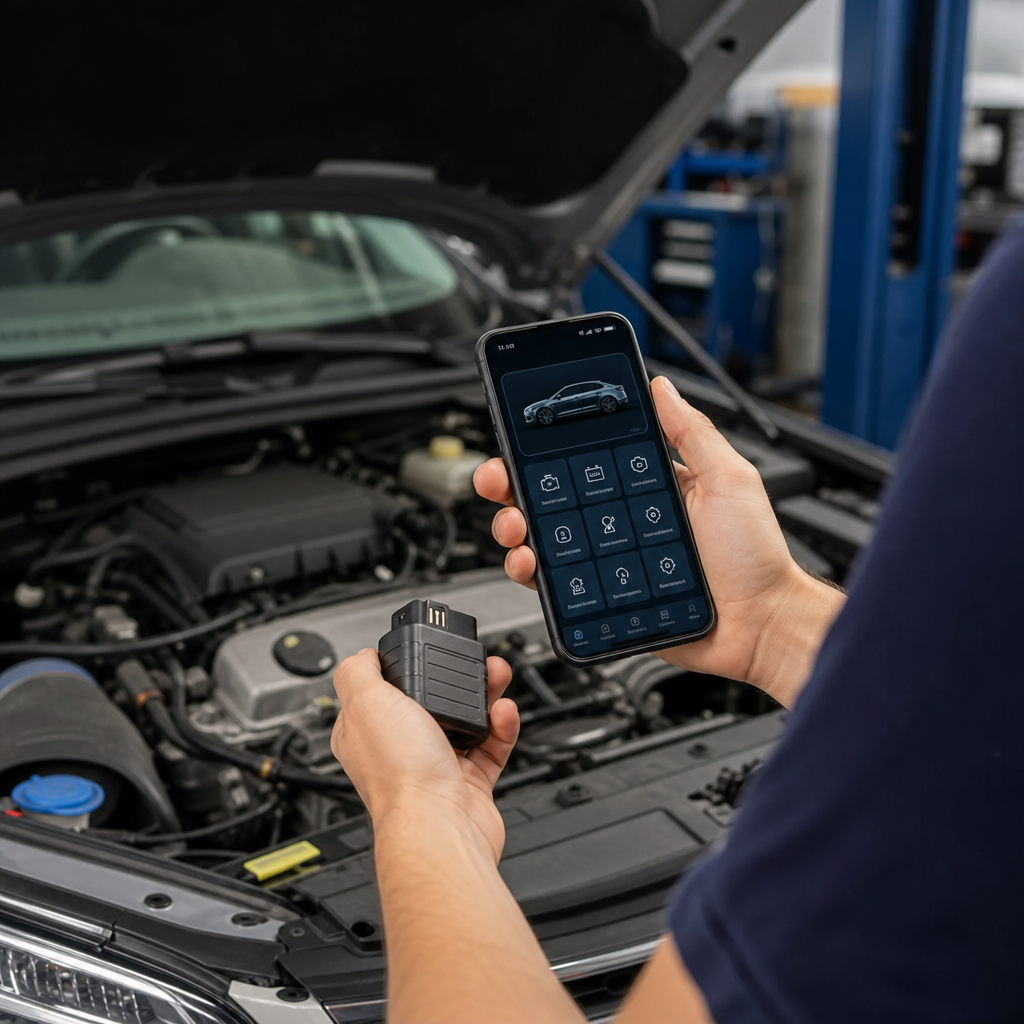
The interface of the best modern apps is intuitive and designed for people without technical training. Confused fault codes are translated into plain language, explaining both the problem and possible causes in understandable terms.You do not need to remember that P0128 means “coolant thermostat”, the app shows this clearly and can even offer links to tutorial videos.
The practicality is also in using the scanner at your convenience. Are you suspicious of a problem? Make a quick reading. Want to monitor the overall performance? Use the mode in real time for a week. Need history to take to the mechanic? Export the report directly from the app. This flexibility makes the scanner adapt to your lifestyle, not the other way around.
Myth 5: A scanner can erase all car crashes permanently
Many people believe that using a scanner to clean fault codes “fixes” the problem. Actually, clearing a fault code is just deleting the error message that appears on the dashboard.The underlying problem continues to exist and the fault will reappear soon, often within a few hours or days of driving.
It’s like turning off the horn when the oil warning light has just turned on. You have removed the visual nuisance, but the low oil remains there, damaging your engine silently. Some apps and adapters allow you to erase codes as a convenient feature for those who have already solved the problem with a mechanic and want to restart the diagnosis, but should never be used as a solution to the problem itself.
The exception is occasional crashes caused by poor contact, vibration during use or system reboots. In these rare cases, erasing the flaw can actually eliminate it permanently. But if a code re-appears after cleaning, the root cause needs professional investigation and repair. Mistaking deleting code with fixing problems is a dangerous mess that can leave you in a compromised security situation.
Truth: Apps scanners make it easy to communicate with mechanics
When you arrive at a mechanic with a printed report or images of the fault codes obtained by your scanner, the conversation changes completely. Instead of describing symptoms vaguely, you present real technical data that the professional can analyze. This eliminates misunderstandings and allows the diagnosis to be faster and more accurate from the beginning.
You are also protected from fraudulent or misdiagnosis. A rogue mechanic may have a harder time convincing you about imaginary problems when you have hard data showing what is really going on. This more transparent client-professional relationship benefits both and results in better work performed with less waste of time and money.
Many modern mechanics even appreciate when customers arrive with previous scanner information. This shows that you take care of your vehicle and are interested in its operation. Instead of mistrust, serious professionals see it as an opportunity to have more context to offer a more competent diagnosis and budget. Mutual transparency strengthens the business relationship.
Myth 6: Scanners work on all cars equally
While the OBD-II standard is mandatory in modern cars, different manufacturers implement variations and add their own protocols.A scanner that works perfectly on a Honda may have limitations on a Volkswagen or BMW.Compatibility also changes depending on the year of manufacture of the vehicle.
Very old cars (before 1996) usually do not have OBD-II port and require specific adapters or even different technology. Very new vehicles may require advanced connection protocols that not all apps support. In addition, some manufacturers like Tesla use proprietary systems that prevent access via standard OBD-II, requiring brand-specific tools.
Before buying a scanner, research specifically about your make, model and year of car. Read user reviews with vehicles identical to yours. Apps like OteApp test compatibility extensively, but there are always variations. Knowing the specific limitations of your case avoids frustration with an investment that will not work as expected.
Truth: Real-time monitoring provides valuable insights
More than simply reading fault code, many modern scanners offer real-time monitoring of vehicle parameters. You can view engine speed, fuel consumption, water temperature, oil pressure and dozens of other data simultaneously.
With this data in hand, you can identify abnormal patterns even before any fault code appears. For example, if the engine temperature usually varies between 85 and 95 degrees but suddenly always stays at 100 degrees, something is starting to fail with the cooling system. You can act preventively, avoiding an overheating that could damage the engine.
Real-time monitoring also helps you develop more efficient driving habits.By seeing in real-time how your actions affect fuel consumption, engine speed and temperature, you learn to drive more economically and less aggressively with the vehicle.
Myth 7: Any OBD-II adapter works with any app
Although the OBD-II standard is universal, not all adapters are the same and not all work perfectly with all apps. There are variations in connection technologies (Bluetooth, WiFi, USB), read quality and compatibility with different communication protocols.A very cheap adapter may not make reliable readings or may disconnect frequently.
Manufacturing quality also matters a lot. Badly finished adapters can have loose or deficient contacts that cause intermittent or incomplete readings. Established brands that test their products tend to offer more reliability.When you combine a dubious quality adapter with an equally dubious app, the result can be frustrating and misleading.
The best way is to jointly research which adapter works well with the app you intend to use, particularly for your car model. Online communities of owners often have shared experiences about which combination works best. Investing a little more in a known brand adapter makes up for the peace of mind of having reliable readings when you need it.
Truth: Scanner data helps in used car purchase negotiation
If you are thinking of buying a used car, taking a scanner to check is a smart strategy. You can do a full reading of the electronic system before any purchase commitment, identifying hidden flaws that the seller may try to hide or not even know that they exist. This knowledge protects you against buying a “cat per hare”.
Failure codes reveal problems that may not be obvious in visual inspection or driving test. A faulty sensor, transmission or emission system problems may be latent but evident to the scanner data.Equipped with this information, you can negotiate the price down or simply refuse a problematic car before signing any document.
Some scanners even let you view the history of accumulated failures, showing how many times the car has had problems and of what type. This offers an insight into the standard of maintenance and care that the previous owner had. A car with clean history or only corrected faults is much more reliable than one with chaotic history of varied problems.
Summarizing truths and myths in practical perspective
Car scanners are real and useful tools that offer valuable information about the operation of your vehicle. They are not panaceas that eliminate the need for mechanics, but they are also not useless or dangerous when used properly. The key is in understanding exactly what they do and what they do not, using them to make better decisions about maintenance.
The truth is that a good scanner app, combined with a quality adapter and a realistic understanding of its capabilities, is a smart investment for any modern car owner.It offers access to information that was once exclusive to mechanics, putting you in a more informed position.
Use these tools responsibly, recognize your limits and enjoy their real benefits. Maintain professional relationship with a good mechanic who knows your car well, but do not be shy in bringing diagnostic information you have obtained. This collaboration between informed owner and experienced professional is the ideal scenario to keep your vehicle running smoothly for as long as possible.