Automotive Scanner App: Full Diagnosis
Announcements
The automotive scanner app is a tool that has become synonymous with modern vehicle diagnostics.Many owners believe that this type of application solves all the problems of the car with just a few taps on the screen of the mobile phone.
Announcements
The reality is much more nuanced than it seems. In this article you will discover the myths and truths about automotive diagnostic apps, understand exactly how they work, know their real limitations and learn when it is really worth investing in them for your life.
The Most Common Myths About Automotive Scanner Apps
The first myth that circulates widely is that an automotive scanner application can diagnose any vehicle problem with 100% accuracy. Many people download an app, connect to the car and believe that the device will tell exactly which part is broken and what the cost of repair is. In fact, these apps work only as error code readers, interpreting the information that the electronic central of your car records. They do not replace a specialized mechanic nor can they access all the diagnostic layers that a professional equipment can.
Another frequent myth is that the automotive scanner app makes the mechanic unnecessary. Owners imagine that by identifying a fault code, they will be able to fix the car themselves without needing a professional. However, knowing the fault code is only the first step of a long diagnostic process. A P0300 code, for example, indicates ignition problems, but it can be caused by worn spark plugs, defective coils, bad fuel or even problems in the distribution chain. The app does not differentiate these causes, it just points out the family of problems. You will need advanced technical knowledge and specific equipment to get to the root of the defect.
A third widely spread myth is that any automotive scanner app works on any car. Some free or low-cost apps actually work with many vehicles, but not all capture data equally effectively. Older cars, rare brand vehicles and very new models may not be fully compatible with generic apps.Each manufacturer has its own communication protocols, and not every app can translate these languages accurately.You may come across reading errors, incomplete codes or impossibility of connecting to the vehicle.
Many people also believe that the automotive scanner app is so powerful that it can erase error codes and magically solve the problem. The truth is that deleting a code without solving the fundamental cause is counterproductive. Yes, the app can clean the memory of failures, but if the problem continues to exist, the code will come back in a few hours or days of use. In addition, deleting errors without fixing them can mask serious problems that will cause much greater damage to the engine or emission systems. This is especially risky if you are trying to pass the vehicle inspection or sell the car.
The Truths About Automotive Scanner App
Now let’s go to the proven facts.The first incontestable truth is that an automotive scanner app really works to read diagnostic codes and you can get it for an affordable price. If before you needed to take the car to the workshop only to find out what the problem was, today you can have a home-based initial lane yourself. The app connects via Bluetooth to an OBD2 adapter, which is the standard connector present in virtually all cars manufactured from 1996. This is a real advantage and democratized access to information that was previously unique to workshops.
Another undeniable truth is that the automotive scanner app works particularly well for simple and obvious problems. If your check engine light has turned on and the problem is a loose fuel cap or a clogged nozzle, the app will identify this without difficulty. The error code will provide a clear direction and you can solve the problem quickly. For owners who want to be one step ahead of the car problems, monitoring the codes regularly is a smart strategy. You will identify small anomalies before they evolve into expensive and irrecoverable damage.
It is also true that the automotive scanner app helps to save money on unnecessary diagnostics. Before taking the car to the workshop, you will already have valuable information about what is happening, allowing you to talk better with the mechanic and negotiate budgets with more foundation. You will know if the problem is simple or complex, being able to identify whether the workshop is charging a fair value or trying to take advantage of your ignorance. This balances the power relationship and allows you to make more conscious decisions about your vehicle.
An important truth is that the automotive scanner app offers real-time data on engine operation. You can view water temperature, engine speed, fuel consumption, battery voltage and dozens of other information continuously while driving. This active monitoring allows you to notice gradual degradations in vehicle performance before they become critical.Aware owners use this functionality to keep their cars in better condition and anticipate preventive maintenance.
How an Automotive Scanner App Really Works
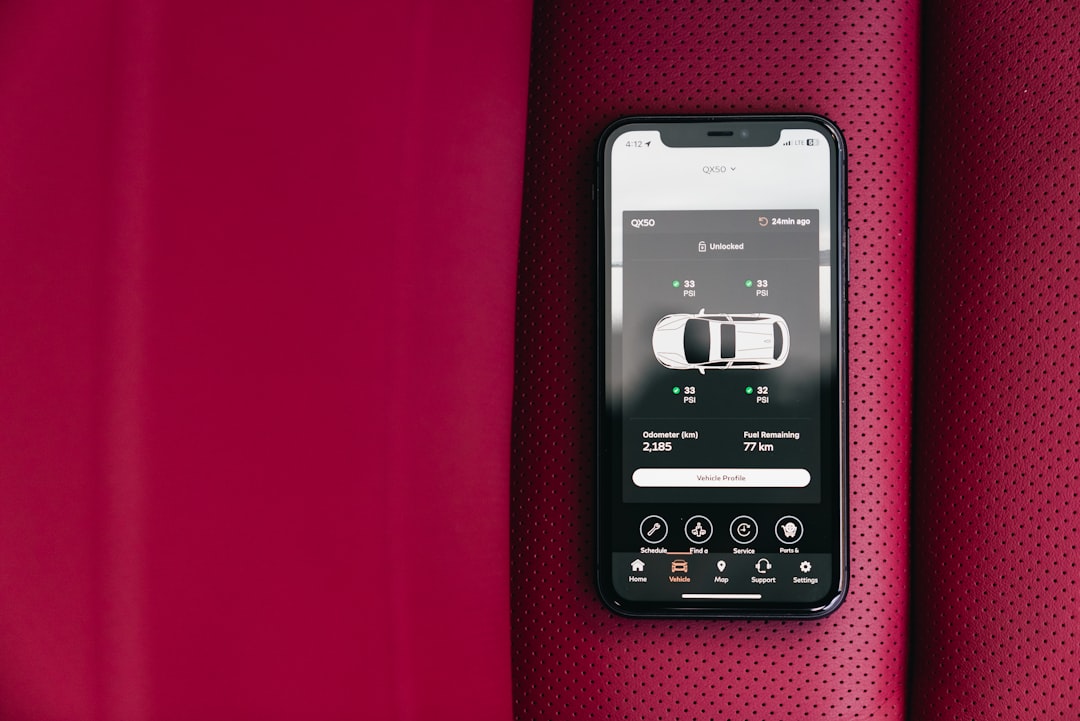
To fully understand what you are doing when you use an automotive scanner app, it is important to know its technical architecture. The app itself is just the visual interface you see on your mobile phone screen. The heavy lifting is done by a small hardware device called an OBD2 adapter, which connects to your car’s diagnostic port, usually located under the driver’s side panel. This adapter translates the information that the car’s power station is constantly processing and converts it into data that the smartphone can interpret.
The OBD2 standard (On-Board Diagnostic version 2) has been implemented mandatorily in all passenger cars manufactured from 1996 in the United States and 2000 in Europe. This standard establishes a universal communication protocol, allowing any generic reader to be able to connect to any modern car. The electronic central of your vehicle is constantly performing diagnostic tests on the engine, transmission, emission, brakes and many other components systems. If any sensor detects an an an an abnormality outside the expected parameters, a fault code is registered in the memory of the onboard computer.
The automotive scanner app can access these stored codes and translate them into language understandable to the user. Each code has a prefix that indicates the category of the problem. Codes that begin with P refer to the engine (Powertrain), B to the body (Body), C to the chassis, and U to the communication network (Network). The following numbers specify exactly which system or sensor is presenting the problem. However, it is crucial to understand that the code does not identify the root cause, it only points out the symptom. A P0128 code indicates that the engine temperature is not rising properly, but can be caused by a faulty thermostat, even a brake valve.
The most advanced apps provide code definitions, fault history and real-time parameter display. You can graphically see how the sensor is behaving, whether it is sending stable signals or fluctuating erroneously. Some apps allow you to compare your car data with the values that the manufacturer considers normal, helping you to identify when something is really out of the standards. However, correctly interpreting this data requires technical knowledge that most owners do not have. This is why the app is a complementary tool, not a replacement for professional diagnosis.
The Real and Often Ignored Limitations
The first limitation you need to understand is that the automotive scanner app only accesses the data that the power station can measure through the sensors. If the problem is in a mechanical component that has no associated sensor, the app will not be able to detect it. A worn wheel bearing, spun-out distribution belt, radiator lock or stretched distribution chain will not generate fault codes because there are no sensors specifically monitoring these components. You will need a visual inspection performed by an experienced mechanic to identify these problems.
Another important limitation is that not all data from the power plant is accessible through the standard OBD2 port. Manufacturers often protect deeper information behind proprietary software that only authorized dealers can access. If your car has a problem involving advanced safety systems, active suspension, all-wheel drive or other high complexity components, a generic app will not be able to penetrate these deeper levels of diagnostics. You will need to take the car to the dealership, where technicians have access to the software licensed by the manufacturer.
Compatibility is another delicate issue that affects many users. Not every OBD2 adapter can communicate with all cars with the same quality. Some cars use proprietary communication protocols or variations of the OBD2 standard that certain adapters do not fully support. If you buy a cheap and generic adapter, you may find that it can not properly connect to your specific car, or that the data it provides is incomplete or inaccurate. The quality of the adapter makes a huge difference in the reliability of the information you receive.
An often underestimated problem is that an automotive scanner app can provide misleading or incomplete diagnostics. If multiple sensors fail simultaneously, or if a faulty sensor is sending erratic signals, the app may point to the wrong cause. An experienced technician will know how to investigate these cases, testing components systematically and recognizing patterns that indicate when the fault code is a secondary consequence of another problem. An inexperienced owner may spend money fixing the wrong component, leaving the real problem intact.
When Is It Really Worth Investing in an Automotive Scanner App
If you own a car a few years old, an automotive scanner app is a smart investment that pays for itself quickly. Most mechanical failures in modern cars generate error codes detectable by these applications, allowing you to identify problems before they evolve into catastrophic damage. A check engine light that you identify early can mean the difference between a repair of five hundred real and another of five thousand real. The investment in a quality OBD2 adapter and a reliable app costs between fifty and two hundred real, value that you recover in unnecessary diagnostics at the first real failure that the car presents.
You should also consider using the app if you participate in auto racing, rally or trackdays. Monitoring engine parameters in real time helps you understand how the car is responding to your driving style, identify mechanical or adjustment problems before they cause damage, and optimize performance on the tracks.Amateur and professional drivers use these tools constantly to get the most out of their equipment while keeping it safe and running smoothly.
If you like to work on the car itself and already have knowledge of automotive mechanics, the automotive scanner app is a valuable extension of your toolkit.It will provide data that will guide your diagnosis, helping you to investigate problems more efficiently and reliably. Owners with this profile can repair most car failures on their own, saving significantly on labor. The app puts in your hands information that was previously the monopoly of professional mechanics.
For owners who simply want to be better informed about the health of their vehicle, an automotive scanner app gives you peace of mind. You can regularly monitor the state of the car, identify worrying trends before they see critical problems, and know exactly what is happening when a warning light comes on. This avoids unpleasant surprises and keeps you in control of the situation, rather than being held hostage to the first workshop you encounter.
Choosing the Right App and Adapter For You
Choosing the right car scanner app starts with understanding what protocols your specific car uses. Modern cars mainly use the CAN (Controller Area Network) protocol, which is the latest standard and offers the best compatibility. A little older cars can use protocols such as ISO 9141 or PWM. Before buying an adapter, research which protocol your car uses to ensure that the adapter you choose is compatible. This information is available in the owner’s manual or in specialized forums about your specific car model.
When it comes to adapters, there are options that vary enormously in price and quality. The cheapest adapters, found on e-commerce platforms for twenty or thirty reais, offer basic functionality and limited compatibility. Intermediate quality adapters, costing between fifty and a hundred reais, will provide better compatibility and faster transfer speed.Professional adapters, which cost two hundred reais or more, offer full compatibility with multiple protocols and access to deeper data.For most owners, an adapter in the middle range offers the best balance between cost and functionality.
As for the apps themselves, there are three main categories. Advertising-funded free apps offer basic functionality, code reading and simple definitions. Low-cost paid apps, between five and fifteen reais, remove ads and add some extra features like crash history and statistics.Professional apps, costing between thirty and a hundred reais, offer advanced functionality, graphical data visualization, comparison with factory parameters, and compatibility with a much wider range of vehicles.If you just want to read the codes occasionally, a free app is enough. If you plan to use regularly and want advanced features, investing in a paid app pays off.
Before making your final choice, research real user reviews with your specific car model. Ask in owner forums, groups on social networks dedicated to your vehicle, and read reviews in app stores. The best recommendation you can receive is from someone who has already tested the app or adapter in the exact same car you own. A tool that works perfectly on one model may have problems on another, so the specific experience is very valuable when choosing.
Maximizing the Value of Your Automotive Scanner App
To get the most out of your diagnostic tool, establish a regular monitoring routine. Read your car parameters once a month, checking if any fault code has been registered.Please pay special attention to any changes in the normal operation data, such as gradual increase in engine temperature, reduction in fuel consumption or drop in battery voltage. These signals may indicate problems that are developing and that have not yet generated official codes.The sooner you notice a problem, the easier and cheaper it will be to fix it.
Use the app to establish a baseline of your car’s normal parameters when it is running well. Write down typical idle values, engine operating temperature, fuel pressure, and other important parameters. When the car exhibits a different behavior, you will be able to compare with these reference values and quickly identify what is abnormal. This knowledge is particularly valuable when you take the car to the mechanic, allowing you to provide specific information that will guide the professional diagnosis.
Keep a history of the faults that the app detects, noting the date, code, circumstances in which it occurred, and any action you have taken to solve it. Over time, you will begin to recognize patterns in your car’s faults. You may notice that a specific code always appears in certain conditions, or that multiple related codes often occur together. This history will be extremely useful if you eventually need to take the car to a technician, providing valuable data that will help diagnose persistent or recurring problems.
Always remember that the automotive scanner app is a complementary tool to the knowledge and experience of a professional mechanic, never a substitute. Use the app to question more informally, to better understand what is happening with your car, and to make more conscious decisions. However, when facing complex problems, unknown or when the app provides conflicting information, do not hesitate to seek professional help. A good mechanic will know how to use the data provided by the app along with their knowledge and tools to get to the root cause of the problem and solve it properly.