
How to tune your guitar in minutes
Announcements
Have you ever wondered why some songs sound so harmonious and pleasant, while others seem out of tune?
Announcements
Tune the guitar correctly it is essential to ensure that your songs are listened to with pleasure. But how to do it quickly and accurately?
Before you begin to fine tune, it is important to know how to identify the ropes the standard tuning starts with the most bass string, usually at the top when you hold the instrument properly.
With the right techniques and digital tools, you can learn how to tune your guitar in minutes, significantly improving the quality of the sound produced.
Main Conclusions
- Learn to identify the guitar strings correctly.
- Understand the standard tuning for your instrument.
- Discover fast and accurate methods to tune your guitar.
- Use digital tools to make the process easier.
- Improve the quality of the sound produced by your guitar.
The Importance of Keeping Your Guitar Tuned
The importance of keeping the guitar tuned cannot be underestimated well-tuned guitar it is essential for any musician who wants to produce quality music.
Why the right tuning makes all the difference
A correct tuning guitar is crucial to the development of your musical ear and the quality of your performances ropes they are out of tune, even the simplest chords can sound unpleasant, compromising the entire musical experience.In addition, the perfect tuning allows you to play along with other musicians or follow recordings without dissonance.

When you should tune your guitar
It’s recommended tune your guitar before each practice session or performance, after transporting the instrument and when there are significant changes in temperature and humidity. Even high-quality guitars need to be tuned regularly, as factors such as string tension and environmental conditions affect tuning. Developing the habit of tuning your instrument regularly will help you recognize when the guitar is out of tune only by sound.
Knowing the Strings of Your Guitar
To play your guitar masterfully, it is essential to know the strings and their tuning. The strings are the essence of the instrument, and understanding them is crucial for a good performance.

The standard tuning: E, A, D, G, B, E
The standard tuning of the guitar strings is: E (Mi), A (There), D (Re), G (Sun), B (Si), and (Mi). From bottom to top, the strings are becoming less and less bass (and thick) to become more acute (and thin). The standard tuning of the guitar, from bass to treble, is: Mi (E), There (A), D (D), Sol (G), Si (B) and Mi (E)the first rope being the thickest and the sixth the thinnest.
Each rope has one specific note in standard tuning, and knowing this is essential to fine-tune properly.
Identifying the tuning dowels
Each guitar string has a corresponding tuning pin on the instrument head. To tune, you need to rotate these pins to increase or decrease the string tension.It is important to note that depending on the guitar model, the pins can rotate in different directions to tighten or loosen the strings.
Familiarize yourself with the location and operation of the tuning dowels it will greatly facilitate the tuning process of your instrument.
How to Tune Your Guitar in Minutes
Correct tuning of the guitar is the first step to an impeccable musical presentation.To achieve this quickly, it is essential to understand both the necessary preparation and the tuning technique.
Preparation before starting to fine tune
Before you start the tuning process, make sure you are in a quiet environment.This will allow you to hear the notes clearly.
Also, position the guitar comfortably on your lap, with your arm slightly tilted upwards, making it easy to access the tuning pins. Check if the ropes are in good condition; old or damaged strings can affect tuning.
Basic step-by-step tuning technique
Touch each string individually and adjust the corresponding pin to match the respective tone.
If the note is in sharp (too high), turn the peg to loosen it, making the note more serious until it reaches the appropriate tone. If the note is in flat (too low), turn the peg to tighten it, creating tension in the string and raising the note.
Rotate the dowels slowly to prevent the rope from breaking due to a sharp increase in tension, especially on the thinner strings.
An effective technique is to first tune the bass strings (Mi, There and Re) and then the treble strings (Sun, Si and Mi), making it easier to perceive the intervals between them.
For new strings, repeat the tuning process a few times over the first few days of use, as they tend to stretch and unclimb easily.
Method 1: Tuning with Electronic Tuner

Using an electronic tuner is the most effective method for tuning your guitar, whether you are a beginner or an experienced musician.This device is able to detect the tone emitted by the strings of your instrument and indicate the correct direction to rotate the tuning pins.
Available Types of Tuners
There are several types of electronic tuners available on the market, each with its specific characteristics.Clip tuners are the most popular for guitar, as they attach to the instrument head and pick up vibrations directly, working well even in noisy environments.In addition, there are pedal tuners, most used by guitarists, and table tuners, which are versatile and can be used with various instruments.
How to Use an Electronic Tuner Properly
To use an electronic tuner correctly, you must play one string at a time and observe the display of the device. The tuner will indicate whether the note is correct, too high (sustenido) or too low (well). Most modern tuners have colored lights that make it easy to see: green when the note is correct, red when it is out of tune.
When tuning with an electronic tuner, it is important to play the string at moderate intensity and let it vibrate freely, without pressing any home on the guitar arm.In addition, many free smartphone apps work just as well as physical tuners, offering the advantage of always being on hand when you need to tune your instrument.
Method 2: Referral Tuning
With tuning by reference, you can confidently tune your guitar. This traditional method uses already tuned instruments or specific devices as a parameter to tune your guitar.
Using a piano or keyboard as a reference
If you have access to a finely tuned and well-preserved piano or keyboard, and feel comfortable with notes, a simple way to tune your guitar is to play each note and adjust the corresponding string. A well-tuned piano or keyboard offers all the notes needed to tune the six strings of the guitar in standard tuning (Mi, There, Re, Sol, Si, Mi).
To tune using a piano as a reference, play the corresponding note on the piano and adjust the string tension of the guitar until both sounds match. This ensures that your guitar is tuned correctly.
Using tuning fork or other sound references
The tuning fork is a classic tool that, when struck, emits a specific sound (usually the note There) that serves as a reference to tune the entire instrument. From the note There of the tuning fork, you can tune the fifth string of the guitar and then use methods of relative tuning for the other strings.
In addition, there are applications that simulate digital tuning forks, issuing reference notes for all strings of the guitar. Other sound references include tuning-specific audio tracks, available online, that play each note of the standard tuning sequentially.
Method 3: Relative Tuning by the 5th House
Relative tuning by the 5th house is a traditional technique that allows you to fine tune your guitar accurately without the need for external equipment. This method uses the guitar’s own strings as a reference, making it especially useful in situations where you do not have access to electronic tuners or other sound references.
The Principle of Tuning by the 5th House
The basic principle of this method is that a string pressed into the fifth house should produce the same note as the next (higher) string played loose.This means that by pressing the fifth house of a string, you are creating a reference to tune the subsequent string.
To start, you need to have at least one string properly tuned, usually the 6th string (Mi bass) or the 5th string (There). From there, you can follow a logical sequence to tune the other strings.
Step by Step to Tune Using this Method
First, press the fifth house of the 6th string (Mi) and compare the sound with the 5th loose string (There). Adjust the 5th string until the sounds are identical. Continue this process: press the fifth house of the 5th string (There) to tune the 4th string (Re), and so on.
The only exception occurs between the 3rd string (Sun) and the 2nd string (Si), where you must press the fourth house of the Sun string, not the fifth. After completing the tuning of all strings, double check the first string you used as a reference, as the tension added to the other strings may have slightly changed its pitch.
This method is especially useful when you are without an electronic tuner or in a very noisy environment. With practice, you can tune your guitar quickly and accurately using the relative tuning by the 5th house.
Digital Tools for Quick Tuning
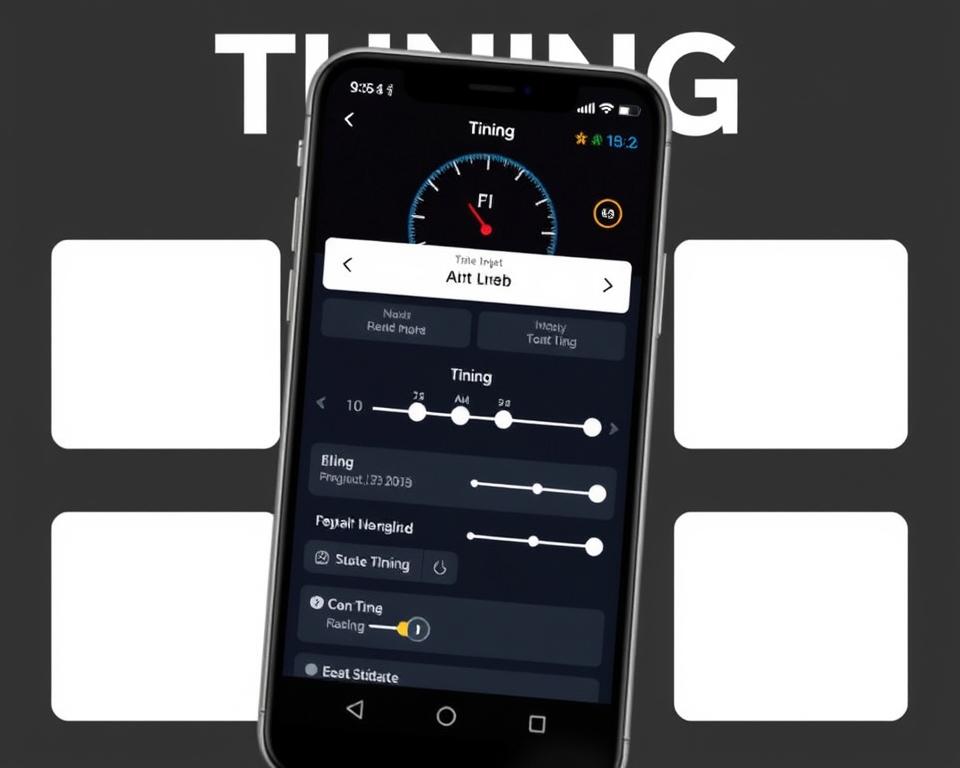
Technology has brought precision and speed to guitar tuning.With the right digital tools, you can tune your instrument in minutes.There are several options available that make the process more accessible and efficient.
Free Apps for Guitar Tuning
There are dozens of free apps for smartphones that work as high-precision tuners.They pick up sound through the microphone of the device and offer additional features such as different types of tuning and integrated metronome.To use one of these applications, simply install it, open it and play each string of your guitar individually, following the visual indications on the screen.
Online Tuners and their Advantages
The online tuners they are a practical alternative when you do not want or can not install an application. They work directly in the browser of your computer or smartphone. The main advantages include immediate access without the need for download, compatibility with any device with internet access and automatic updates. In addition, some video platforms offer reference tracks for tuning, where you can listen to each note of the standard tuning and adjust your guitar accordingly.
When choosing a digital tuning tool, consider factors such as accuracy, intuitive interface, and the ability to function in noisy environments.With these tools, you can ensure that your guitar is always tuned and ready to play.
Common Tune Problems and How to Solve them
Tune problems on the guitar are common, but there are effective solutions to solve them. Even following all the correct tuning techniques, you may face some problems that cause your guitar to quickly unset.
When the strings do not keep the tuning
New strings tend to stretch in the first few days of use, so it is normal for your guitar to unplug more often soon after changing strings. In addition, problems with the strings, such as looseness or wear, can prevent the strings from maintaining proper tension, resulting in unstable tuning. Sudden changes in temperature and humidity also affect the tuning of the guitar, as the wood of the instrument expands and contracts, changing the tension of the strings.
Solutions for unstable tuning
For new strings, an effective solution is to stretch them manually before installation and, after tuning them, gently pull them up at various points on your arm. Regularly check your guitar’s braces by tightening the screws if necessary, or consider replacing them if they are too worn. In travel or situations with significant weather changes, keep your guitar in a suitable case and give it time to adapt to the new environment before playing.
By following these tips, you can minimize tuning issues and keep your guitar sounding good for longer.
Conclusion
With the right techniques and the right tools tune your guitar it has never been easier.In this article, we explore different methods to help you achieve perfect tuning in minutes.
Since the use of electronic tuners even techniques of relative tuning by fifth house, Each method has its advantages and can be chosen according to your needs and level of musical experience.
Remember that a regular practice tuning will help develop your musical ear, allowing you to more easily identify when a rope regardless of the method chosen, it is crucial to check the tuning of your guitar before each practice session or presentation.
With these techniques and tools, you can tune your guitar quickly and accurately, ensuring that your instrument always be ready to produce the best sound possible.