Monitor Cell Conversations with Parental Control
Announcements
Monitoring conversations from another cell phone with parental control is a responsibility many parents face in the digital age. Concern for the safety of children online grows every day, especially considering the risks of contact with strangers, cyberbullying and inappropriate content.
Announcements
Unlike generic articles that only list apps, this guide offers a practical overview focused on checklist and checklists that you should follow before, during and after implementing any parental control solution.You will learn not only what tools to use, but also how to validate that monitoring is working properly, what the ethical limits of this practice are, and how to maintain a relationship of trust with your children while protecting them from the dangers of the internet.
Understand the Purpose of Conversation Monitoring
Before implementing any tool to monitor conversations on mobile phones, you need to clearly understand your goals. Monitoring should not be a form of authoritarian control, but rather a strategy of protection against real risks such as online predators, fraud, digital bullying and exposure to harmful content. When you define this purpose well, you can choose the right tools and implement them more effectively and ethically.
If you have young children who are still learning to use social networks, monitoring is more justifiable than if you were spying on older teens for no apparent reason.
Pre-Implementation Checklist: What You Should Check First
Before installing any monitoring application or tool, you need to go through an initial checklist that ensures that this action is appropriate for your situation. This is the most important step because it defines whether you are making the right decision before investing time and resources.
Start by checking local legislation on monitoring minors.You have the legal right to monitor underage children in virtually every jurisdiction, but there are important nuances. Transparency is essential in many places, that is, you may need to inform your children that they are being monitored.In addition, some countries have specific privacy laws that you must respect, and installing apps without consent may have legal implications.
Also check if you have passwords for access to your child’s devices. If you don’t, this may be a sign that trust is compromised and you may need to talk openly about security before implementing technical monitoring. You should also check if the devices are in your name or if they are owned by your children, as this influences their access rights and application installation.
Another crucial point is to assess whether there is specific cause for concern. Have you noticed changes in behavior, communication with suspicious strangers, or is it just a general preventive measure? The answer to this question determines the intensity of monitoring you need to implement. Excessive monitoring without justification can damage the trust relationship with your children and create a toxic family environment.
Tool Validation Checklist: How to Choose the Best Solution
When you decide to implement conversation monitoring, it is critical to choose a tool that is reliable, legal and effective. Not all parental control applications work the same or offer the same features. You need to evaluate each option using specific criteria to ensure you are making the right choice.
First, make sure the app is compatible with the operating system of the children’s devices. If they use iPhone, you will need a solution that works on iOS, while Android requires another kind of approach.Many tools work on only one system, so you should confirm this compatibility before paying or spending time with installation and configuration.
Then you should validate what types of conversations the app can monitor. Not all tools can access messages from all apps. Some work only with traditional SMS, while others monitor WhatsApp, Telegram, Facebook Messenger, Instagram Direct Messages and other instant messaging apps.
Check the reputation of the developer company and read reviews from real users. You can find reviews on application stores, specialized forums and security analysis sites.Search for information about data privacy, as any tool that accesses messages from your children will also have access to sensitive information that you do not want to be leaked or sold to third parties.
Confirm that the app provides proper technical support. You may need help during installation, setup, or to resolve issues that arise. Well-established apps often have clear documentation, video tutorials, and email or chat support available to users. Abandoned or unsupported tools can leave you unaided when you need it most.
It is also important to check the total cost. Some solutions are free but limited, others charge a monthly fee or a one-time fee. You should calculate whether the investment is justifiable for your situation, especially considering how many devices you need to monitor. Compare the amount with the benefits offered and see if it makes financial sense for your family budget.
Installation and Configuration Checklist
When you finally choose the tool and are ready to install, you need to follow a careful process to ensure that everything works correctly. Incorrect installation can result in incomplete monitoring, rapid detection by the child, or even damage to the device.
Start by ensuring that you have physical access to the device that will be monitored. You will need to unlock your phone, access the settings and possibly enter your account credentials. It is not possible to install many monitoring applications without this direct access, so make sure you have enough time and privacy to do so without the child discovering before the appropriate time.
Before you start the installation, you should back up all important data from the device. Although well-developed parental control apps do not cause data loss, it is always wise to have a backup as a precaution.You can use iCloud for iPhone or Google Drive for Android to do this quickly and safely.
Make sure your device has enough storage space.Some monitoring apps consume a lot of space, especially if they are storing conversation and activity histories.You must ensure that there is at least 500 MB to 1 GB of available space before proceeding with the installation.
During installation, follow the exact instructions provided by the application developer. Skip no steps and read all the permissions that the application will request. You may receive privacy or security warnings, which is normal. Authorize all necessary accesses, such as permission to read messages, access contacts and monitor applications.
After installation, set up your account credentials if the application requires it. Many tools work through an online control panel where you access what has been monitored. You must create a strong and unique password, store that credential in a secure location, and set up two-factor authentication if available.
Test the operation of the application immediately after installation. You can do this by sending a message to the monitored device and checking whether it appears in the control panel in real time or close to it. If the application does not show activities within a few minutes, there may be configuration problems that you need to solve.
Active Monitoring Checklist: Validate Continuous Functionality
After the application is installed, you can not just forget about it. Effective monitoring requires periodic validation to ensure that the tool continues to work properly and capturing the conversations as expected. You should establish a regular verification pattern to keep the system running optimally.
Check daily if the application continues to receive data. You can do this by accessing the control panel and watching if recent activities appear. If the application shows data from yesterday but nothing today, there is a problem that needs to be solved quickly. Sometimes the application may be disabled, without internet connection or until it has been discovered and uninstalled by the child.
Validate that the app is capturing conversations from all the messaging apps your child uses. If you know that it uses WhatsApp frequently but the monitoring app does not show any WhatsApp messages, there is a configuration or compatibility issue. You can do a test by sending a message via WhatsApp to the device and checking if it appears on the dashboard.
Confirm that the app is storing conversation history in sufficient depth.Some apps have a retention limit, that is, it only keeps conversations from the last 7, 30 or 90 days.You should know what this limit is so that you do not lose important information.If you need a longer history, you may need to print or export the conversations regularly.
Check for notifications or alerts you have set up. Many apps allow you to receive alerts when specific keywords appear in conversations, when your device tries to connect to a specific network, or when certain contacts contact you.
Update the app regularly when new versions are available. Updates often include compatibility improvements, security fixes, and new features. You should allow automatic updates if available or manually check in the app store each week.
Checklist of Communication with Children on Monitoring
An often overlooked aspect of monitoring is honest communication with your children about why you are implementing this measure. Depending on their age and local laws, you may need to be transparent about monitoring.Even if you are not required, being honest often results in better acceptance and less damage to trust.
Before you talk about monitoring, you should clearly define what the reasons are. You can explain that it is to protect against predators, fraud or bullying, and not to control your social life. You should be honest about what will be monitored specifically and what you do not intend to do, such as reading private journals or things that are not related to security.
Choose an appropriate time for this conversation.You should not address this issue when you are angry or after discovering something problematic. Choose a calm, face-to-face moment if possible where you can have a quiet and open discussion. Let your children ask questions and answer them honestly.
Set clear limits on monitoring. For example, you can say that you will not read all conversations, only those that seem suspicious or involve known risks. You can also establish that monitoring will be reduced over time as trust increases, or will be completely removed at a certain age.
Invest time in teaching about digital security.You should not only monitor, but also educate your children about online risks, how to recognize predators, not share sensitive information and how to behave responsibly on the internet.This makes monitoring less about distrust and more about joint protection.
Identified Problem Response Checklist
When you discover something problematic through monitoring, such as suspicious conversations or contact with strangers, how should you react? You need to have a plan prepared to respond appropriately and effectively without aggravating the situation or further damaging trust.
First, you must validate the information you have found. An isolated conversation may be out of context, or you may have misinterpreted. Before confronting your child, consider whether there really is a risk or whether it may just be a misunderstanding.
When you are sure there is a real problem, you should approach the matter calmly and without confrontation. Avoid using monitoring information as a way to demonstrate that you were spying. Instead, you can use a more general approach, such as “noticed that you are talking to someone you do not know, could you tell me about it?”
Listen to your child’s explanation before making accusations.There may be legitimate reasons for conversations that seem suspicious from your point of view. Perhaps it’s a new school friend, someone who is helping with a project or even a contact that the child knows you would disapprove.
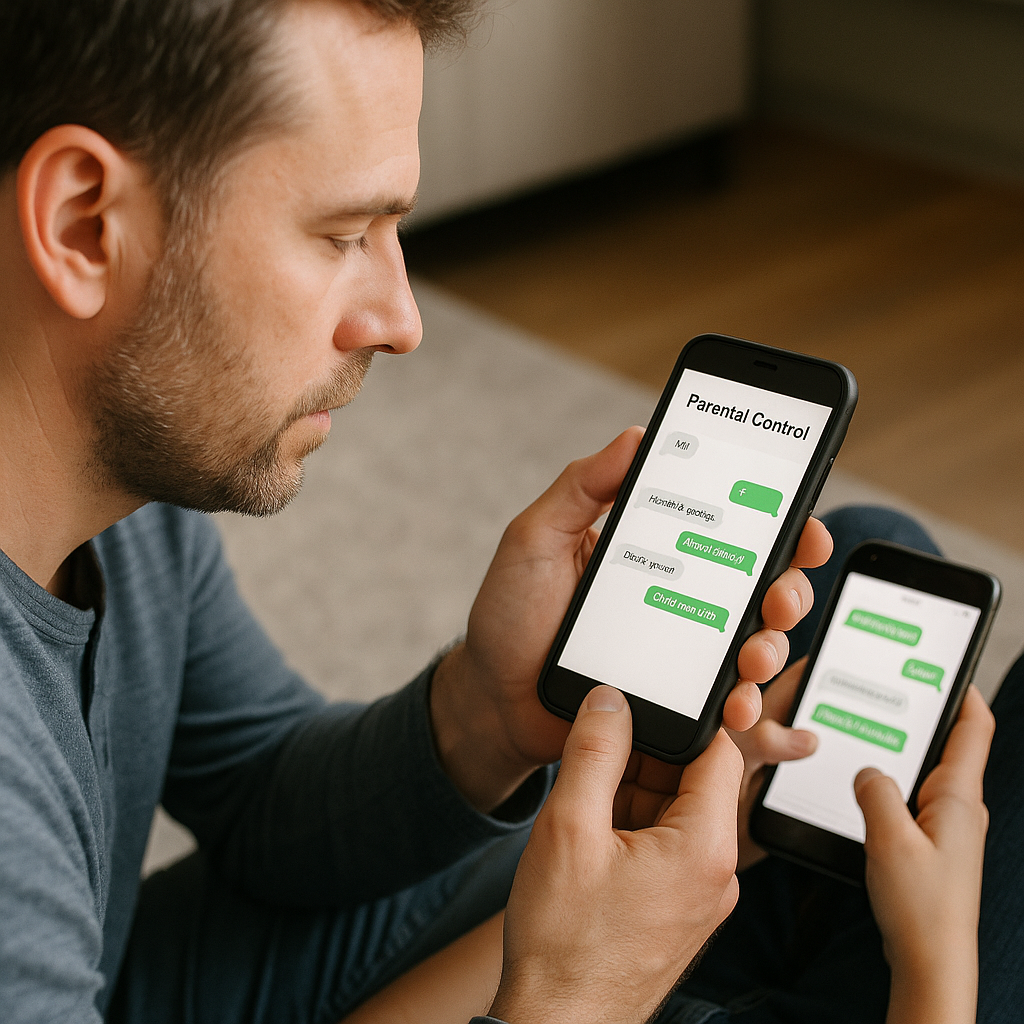
If there is a real identified risk, such as contact with a predator or bullying situation, you should take appropriate actions. This may include blocking contacts, reporting to platforms, engaging school or authorities as needed. You should also seek professional support, such as a psychologist or counselor, if the problem is more serious.
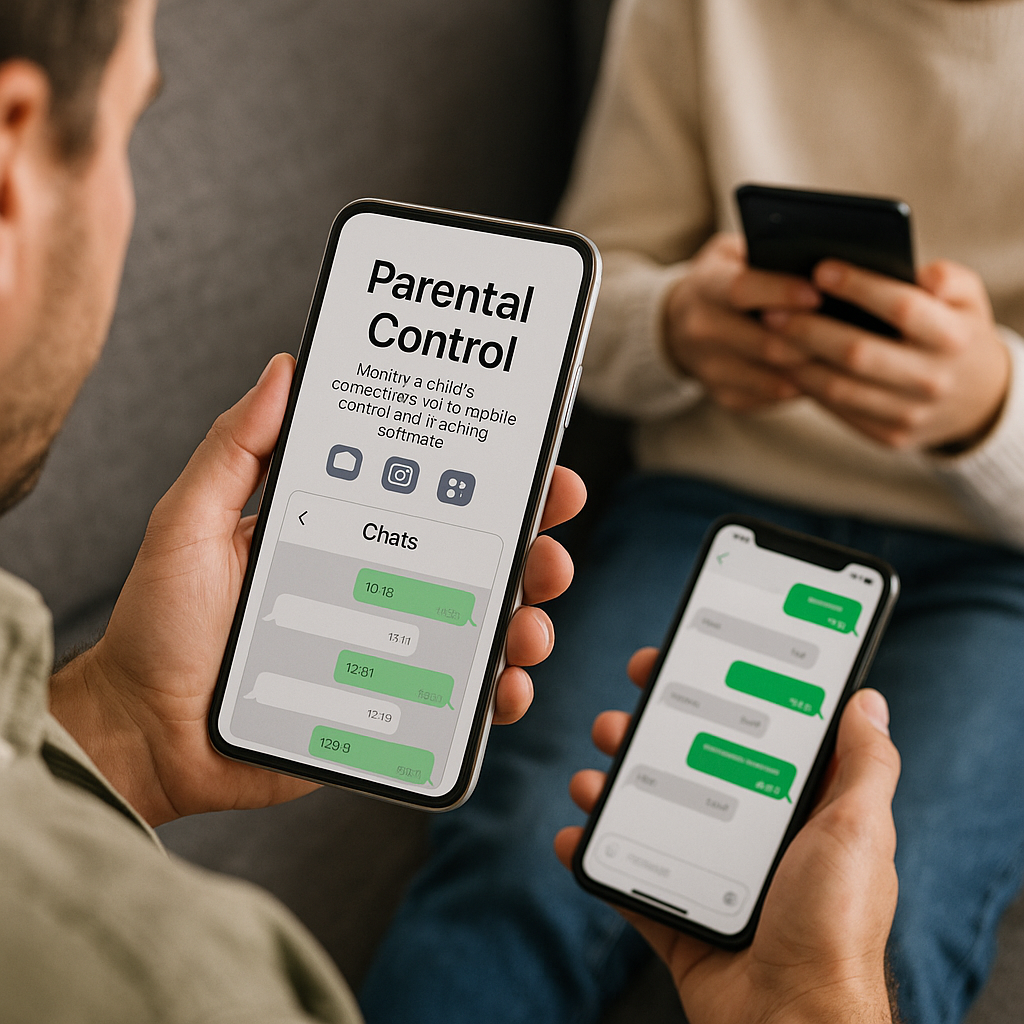
Privacy and Security Checklist of the Monitoring System
While you are monitoring your children, you also need to ensure that your own monitoring system is safe and private. The information you are collecting and storing is extremely sensitive, including private conversations and location data.
Create a strong and unique password for your account in the monitoring app control panel.Use combinations of upper, lower case letters, numbers, and special characters.You should not use passwords that appear in your email account or other online accounts, as this could compromise everything if one of them is hacked.
If available, enable two-factor authentication on your monitoring account. This adds an extra layer of security by requiring a confirmation code in addition to the password when you access the dashboard. You can receive these codes via SMS, email, or authenticator app, depending on what the service offers.
Do not share your credentials with anyone, not even spouses. If you are in a relationship where monitoring decisions should be joint, ideally each person has their own account with the same permissions.Sharing a single account makes it easier to leak credentials and makes it difficult to track who did what.
Keep the device you use to access the dashboard also secure. Use strong passwords, keep the operating system up to date with security patches, and consider using a dedicated computer or device only for that access.
Back up the important logs that the app collects. If the app is accidentally uninstalled or the company shuts down the service, you may lose all history.You can print out the important conversations or use export functionality if available to keep a personal record.
Legal and Ethical Compliance Checklist
In addition to technical issues, you must ensure that your monitoring complies with local laws and ethical standards.You may be a parent with good intentions, but ignoring legal aspects can result in unpleasant consequences, including legal proceedings against you.
Most countries allow parents to monitor minor children, but some have specific requirements like informing your children about it. You should know exactly what the local law is and ensure that it complies.
If you are monitoring in a context of shared custody or complex family relationships, you may need legal permission from other guardians. Installing monitoring without consent of spouses or guardians may violate court orders and create serious legal problems.
Make sure the app you choose complies with data protection laws like GDPR in Brazil or GDPR in Europe. Serious parental control companies comply with these regulations, which means your data and children are being treated within legal privacy standards.
Consider the ethical aspect beyond the legal aspect. Just because something is legally allowed does not mean it is ethically correct. Excessive monitoring can violate privacy in a harmful way, even if permitted by law.
Checklist of Alternatives and Complements to Technical Monitoring
Technical monitoring is only one part of the child protection strategy.You should not rely solely on apps to ensure online safety.There are many other measures you can implement that are equally or more important than direct monitoring.
Consider implementing additional technical controls such as screen time limit, application restriction, and content filter. These controls can be implemented through native device tools or through dedicated apps.
Teach your children about phishing, how to recognize predators, the importance of not sharing personal data, and how to deal with cyberbullying.An educated child is less vulnerable to online risks than a monitored child who is ignorant about dangers.
Keep communication open and regular about online activities.You do not need to be peeking 24/7 if you have open conversations where your children voluntarily share information about who they are talking to and what they are doing. Trust and mutual transparency are often more effective than covert monitoring.
Consider using network filters on your WiFi router to block certain websites or content categories. This offers network-level protection that works on any connected device, not just your phone.You can also limit internet connection times to ensure adequate sleep time and family interaction.
Review Checklist and Periodic Adjustment
As children grow and circumstances change, you need to review and adjust your approach regularly.You should have an established process to assess whether monitoring remains appropriate and effective.
Every three months, you should review whether monitoring keeps uncovering issues or is simply invading privacy unnecessarily. If there are no security issues encountered for months and trust between you and your children is high, it may be time to reduce the intensity of monitoring.
Validate if the tools you are using remain relevant. Messaging apps evolve, new platforms emerge, and what your kids use may change. You should regularly check which apps your kids are currently using and whether your monitoring system covers them all.
If you have decided to be transparent about monitoring, you should periodically check that this approach continues to work.Growing resistance may indicate that it is time to renegotiate the terms or explain again the reasons for monitoring.
Consider the cognitive and emotional development of children. A 10-year-old child can accept and even understand monitoring well, but a 17-year-old can deeply resent it. You should adjust your approach to be age-appropriate, understanding ability and emotional sensitivity of each child.
Document your monitoring process in a structured way. Keep records of why you chose to monitor, what tools you installed, what you found and how you responded. This is not only for legal purposes, but also so that you can review your approach later and make informed adjustments.
Implementing a Robust System with OteApp
For those looking for an integrated solution that combines conversation monitoring with comprehensive parental control, specialized platforms offer a more complete experience. A well-structured system should include not only message monitoring, but also location tracking, application control, content filtering, and detailed reporting.
The advantage of using a dedicated platform is having everything in one control panel. Instead of managing multiple different applications, you access a single portal where you can monitor conversations, see real-time location, check browsing history and set usage restrictions.
These platforms often offer automatic reporting and data analysis.You can receive daily or weekly summaries on activities, automatic alerts for suspicious behavior, and graphical visualizations that make it easier to understand behavior patterns.
Integration with multiple messaging apps is more seamless on dedicated platforms. While individual apps can monitor only one service, specialized platforms synchronize data from WhatsApp, Telegram, Instagram, Snapchat, TikTok and more in one place.
Support and updates are typically more robust on consolidated platforms. You have access to dedicated support teams, full documentation, video tutorials, and user communities.Compatibility updates are released regularly to ensure that they work with the latest versions of operating systems and applications.
Data security and privacy is also a higher priority on established platforms.They invest in data encryption, compliance with international privacy regulations and security audits.You can have more confidence that the sensitive data you are collecting is being stored and processed securely.
Final Validation: Your Complete Checklist before Starting
Before you start your conversation monitoring system, do a final review using this complete checklist.Make sure you answered yes to all of these points before proceeding.If there are any items that you cannot confirm or that are unsafe, review this area before implementing.
Do you fully understand why you are implementing monitoring and can explain this clearly to your children? You have checked the local laws and know that you have a legal right to monitor your minor children? Have you ever discussed with spouses or guardians and have agreement from everyone involved in the education of children?
Have you chosen a tool that is compatible with the devices used by your children? Have you confirmed that the tool monitors all the messaging apps your children currently use? Have you validated that the developer company has a good reputation and complies with privacy laws?
Do you have physical access to the devices to install the application? Did you back up all important data before installation? Did you test the application after installation to ensure that you are capturing data correctly?Did you implement security measures to protect your own access credentials?
Have you planned how you will communicate with your children about monitoring? Have you set clear limits on what will be and what will not be monitored? Have you established a plan to respond if you find something problematic? Do you have a schedule to periodically review and adjust the system as your children grow up?
If you answered yes to all these points, you are ready to implement a responsible and effective monitoring system. Remember that the ultimate goal is not to control your children, but to protect them while developing trust and digital responsibility that will last a lifetime. Monitoring is a temporary tool, not the ultimate solution for online security.