Automotive Scanner App: Full Diagnosis
Announcements
An automotive scanner app is the tool you were hoping to keep your vehicle running smoothly.It connects to your car via the OBD-II diagnostic port and offers detailed information on engine performance, mechanical issues and error codes in real time.
Announcements
Nowadays, vehicle owners are looking for practical solutions that will allow them to better understand what is happening with their car before leading to a mechanic.The automotive scanner via app has become an indispensable trend, combining affordable technology with in-depth knowledge about vehicle diagnostics.Let’s explore how this solution works and why you should consider adopting it.
What is a Digital Automotive Scanner
An automotive scanner is an electronic device connected to a mobile application that reads the data generated by the on-board computer of your vehicle. It accesses the engine control unit (ECU) and extracts valuable information about the operation of various systems: engine, transmission, brakes, air conditioning and more. This communication happens through the OBD-II diagnostic protocol, an international standard present in virtually all modern cars.
The application works as a friendly interface between you and the complex technical data of your vehicle. While the physical scanner collects the information, the app translates them into understandable language, showing graphs, alerts and recommendations. You do not have to be mechanical to understand what is happening with your car. Most applications work on iOS and Android smartphones, making diagnosis accessible and convenient.
How Automotive Diagnostics Works via App
The process begins when you connect the scanner to the OBD-II connector of your vehicle, usually located under the instrument panel. The device communicates via Bluetooth or WiFi with your smartphone, and the application begins to collect data in real time. The system monitors hundreds of parameters simultaneously: engine speed, fuel consumption, coolant temperature, turbo pressure and more.
When the onboard computer detects an anomaly, it generates a fault code, known as a DTC (Diagnostic Trouble Code) code. The application receives this code and decodes it, explaining exactly what the problem is. For example, the P0420 code indicates that the catalyst is not working properly. This information allows you to know precisely what needs to be checked or fixed.
Data reading occurs continuously as you drive the vehicle, providing dynamic performance analysis. You can track how each component is responding under different conditions of use: acceleration, braking, gears and speeds. This real-time visibility is critical to identify intermittent problems that do not appear in a single static scan.
Current Trends in Automotive Scanner Apps
The automotive diagnostics industry is evolving rapidly, and modern applications incorporate features that go far beyond simple code reading. Artificial intelligence and machine learning are starting to be part of diagnostic analysis, allowing apps to learn from fault histories and identify patterns that humans could miss.
Another important trend is integration with cloud services, allowing your diagnostic data to be synchronized between devices and stored securely. You can consult the complete history of your car checks anywhere and share information with trusted mechanics remotely. This democratizes access to technical knowledge and reduces the dependence on going in person to a workshop for a simple initial consultation.
Applications are also becoming more specialized, with versions developed for different vehicle brands or types of diagnostics. While some focus on general fault reading, others are dedicated exclusively to diagnosing high-performance engines or electric vehicles.
Advantages of Using an Automotive Scanner App
Financial savings is one of the main reasons why you should consider using an automotive scanner. Instead of paying a diagnostic fee in a traditional workshop, which can range from $ 100 to $ 500, you make a one-time investment in an application and a low-cost Bluetooth scanner. Many quality scanners are available for less than $ 200, and some applications offer free versions with basic functionality.
You gain autonomy and control over the maintenance of your vehicle when you have this tool. Instead of relying only on the interpretation of a mechanic, you can do your own check and arrive at the workshop with prior knowledge of the problem. This significantly reduces the chances of being the victim of unnecessary repairs or overcharging for services. You become a more informed consumer and can negotiate more safely.
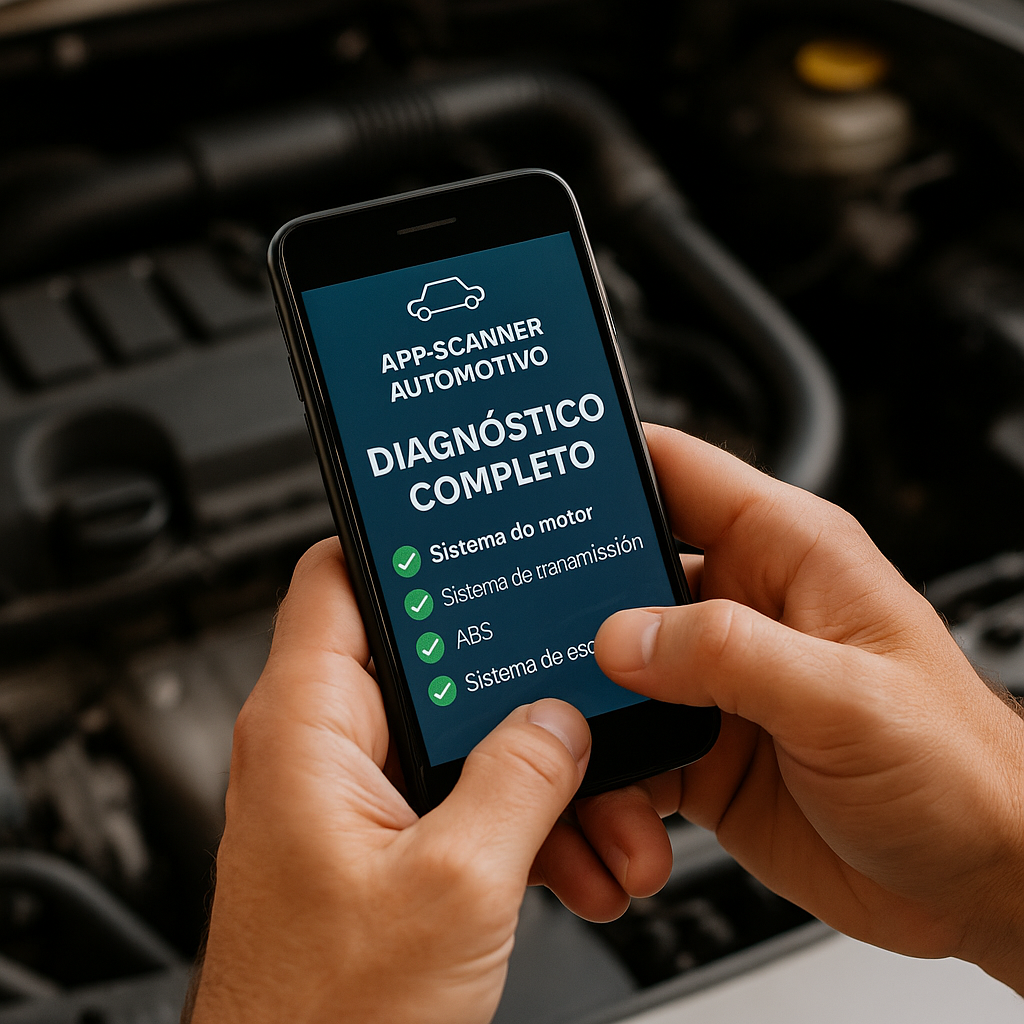
The convenience of having on-demand diagnostics is another transformative benefit. You can check the status of your car anytime, anywhere, without relying on the hours of service of a workshop. If an alert light comes on the dashboard, you immediately check what it means and whether it is safe to continue driving or whether you need to seek emergency service. This peace of mind is valuable for long trips or for owners who use the vehicle professionally.
Best Practices when Using Automotive Scanner Apps
The first best practice is to choose an application from a reliable source and with good reviews in official app stores.Search about the developer’s reputation, the number of downloads and read user reviews.A well-developed application offers clear explanations of error codes, not only the technical code, but the meaning in accessible language.Make sure the app offers regular updates and user support.
Keep your diagnostic data organized and create a maintenance history based on the information you collect.Take screenshots or export reports of identified problems and maintenance performed. This record will be valuable if you need to sell the vehicle in the future, as it demonstrates that the car has been well maintained.It also helps mechanics better understand the history of problems of your vehicle during future maintenance.
Do not confuse the reading of fault codes with a complete diagnosis. An error code points to the problem area, but does not always identify the root cause. A defective oxygen sensor can generate the same code as a problem in the lambda probe or a leak in the exhaust system. Use the application as a first-time tool, but always consult a qualified mechanic for complex problems or affecting the safety of the vehicle.
Familiarize yourself with the normal operating parameters of your specific car using the app under normal operating conditions.This creates a baseline that helps you identify anomalies faster. Write down typical values of RPM, engine temperature, fuel consumption and other metrics when the car is running smoothly, so that any significant deviation is quickly noticed and investigated.
Limitations and Important Considerations
Not all automotive problems generate fault codes that can be read by a scanner. Strange noises, vibrations, intermittent problems or simple mechanical failures such as brake pad wear sometimes do not activate any alerts in the diagnostic system. In these cases, you still need a visual and auditory inspection performed by an experienced professional. The scanner is a complementary tool, not a complete replacement for a traditional professional diagnosis.
The quality of the scanner hardware also significantly influences the results. Scanners that are very cheap or of unknown brands may present inaccurate readings or lack of compatibility with certain vehicle models. Investing in a recognized brand scanner, even if a little more expensive, usually ensures better compatibility and more functionality. Check if the scanner supports your specific vehicle model before purchasing.
Data privacy and security also deserve attention.Some apps collect information about your driving and location patterns.Read the privacy policies before using any app and consider using only reputable developer apps that offer transparency about how your data is used.If privacy is a concern, choose apps that work offline or store data locally on your device.
The Future of Automotive Scanners in Brazil
The Brazilian automotive diagnostics market is expanding, driven by the growth of vehicle owners seeking greater autonomy and economy. Applications developed specifically for the Brazilian market begin to appear, taking into account peculiarities of popular vehicles here, local legislation and regional maintenance standards. This location makes the tools increasingly relevant and useful to the average user.
Integration with preventive maintenance services is another trend that should consolidate. You can receive automatic notifications when the application detects that a certain component is approaching the end of its useful life, based on predictive analysis. This will transform automotive maintenance from something reactive, where you fix when the problem appears, to something proactive, where you prevent failures before they occur.
Connecting with verified mechanic networks is also growing. Some applications already allow you to share your diagnosis directly with professionals you trust, receive budgets based on real data and even service schedules.This digital automotive marketplace model is democratizing access to quality services and making the car maintenance experience more transparent and efficient for everyone involved.