
Monitor Messages With Parental Control
Announcements
Controlling the messages your child receives and sends is one of the biggest concerns of modern parents.Technology offers efficient solutions to monitor this content without completely invading the privacy of the child.
Announcements
In this article, you will discover how to implement a messaging monitoring system that protects your child while respecting his development.We will explore proven practices, available tools and a practical checklist to ensure that you do not leave anything aside.
Why Monitoring Your Son’s Messages Is Important
Children and teens are increasingly exposed to digital risks through messaging apps. Predators, cyberbullying, sharing inappropriate content and unknown contacts pose real threats that you need to know and fight. Monitoring is not about distrust, but about active protection and education.
When you monitor messages, you can identify worrying patterns before they develop into serious problems. Children often do not report uncomfortable situations because they feel ashamed, afraid or do not understand the risk.A attentive parent detects behavioral changes and open conversation with the child about what is happening digitally.
Monitoring also works as an educational tool, allowing you to teach your child about responsible communication.When she knows that messages can be verified, she tends to be more careful with what she shares and with whom she talks.
Understanding Types of Parental Control for Messaging
There are several approaches to monitoring messages, each with different advantages. Built-in parental controls come installed on the device and offer basic functionality at no additional cost. Dedicated monitoring applications provide detailed reports and advanced features, but usually require monthly subscription.
Parental control server solutions work in the cloud, synchronizing data from multiple devices in real time. This approach is particularly useful when you have more than one child or when you want to track activity regardless of location.
Manual monitoring, although more laborious, allows direct conversations about privacy.You set specific times to review messages together with your child, creating an environment of mutual transparency. This approach requires established trust and works best with older children who understand the importance of digital security.
Tools and Platforms Available for Monitoring
Android offers native parental controls through Google Family Link, which allows you to view messages from synced apps.You can block contacts, set screen time limits, and receive alerts about suspicious activity.IOS has Screen Time with similar functionality, seamlessly integrating with Apple devices.
Specialized apps like Bark, Net Nanny, and Qustodio offer deeper message monitoring across multiple platforms. These tools track content on WhatsApp, Instagram, Snapchat, Discord, and other apps popular with children.They use artificial intelligence to automatically identify risky language, addresses, phone numbers, and other sensitive information.
Services like the one offered by OteApp allow you to create personalized digital security checklists, helping you keep track of what measures you have already implemented. You set up reminders to review privacy settings, update credentials, and talk to your child about new risks.
Setting Parental Controls on First Contact
When you are setting up your device for the first time, it is the ideal time to enable all parental controls. Access the security settings and create a separate parental account with administrative privileges. This ensures that your child cannot disable the protections without your authorization, creating an effective technical barrier.
Set strong passwords for your parental account and do not share with anyone other than a spouse or guardian.These credentials control access to your child’s sensitive data, so protect them with the same care you use for your bank account.Enable two-factor authentication when available for additional layers of security.
Set up content restrictions according to the appropriate age. You can block certain apps, set filters for search results, and restrict downloads of inappropriate content. Start with more restrictive settings and gradually relax as your child demonstrates responsibility and digital maturity.
Implementing Message Filters and Blocks
Message filters work by blocking or alerting you to communications with specific features. You can set the system to block messages from unknown contacts, suspicious keywords, or potentially dangerous links. These locks operate automatically in real time, preventing your child from receiving or sending problematic content.
Create lists of allowed contacts that your child can chat with without restrictions. These lists often include close family, school friends, and verified teachers. Any message from a number outside of this list may be blocked or require your approval before responding, depending on the setting you choose.
Set up alerts for keywords related to risky behaviors like self-harm, bullying, abuse, or contact from strangers. When these words appear in conversations, you get immediate notification allowing for quick investigation.This approach does not invade privacy constantly, but creates an “early warning” system for dangerous situations.
Real-Time Monitoring vs Periodic Review
Real-time monitoring offers maximum protection because you see each message as it is sent or received. You can intervene immediately if you detect something problematic, talking to your child before the situation worsens.
Periodic review, performed on specific days of the week, offers moderate protection while preserving more privacy.Your child knows that you will review messages at certain times, which encourages you to be responsible but does not feel constantly watched.
A hybrid approach combines the best of both worlds. You use real-time monitoring only for high-risk keywords and blocked contacts, while performing weekly manual review of general conversations.
Parental Control Implementation Checklist for Messages
Use this handy checklist to ensure that you have correctly implemented monitoring of your child’s messages. Mark each item as complete, creating a record of your protective actions.This systematic approach prevents you from forgetting important steps or leaving security loopholes.
First, establish the technical fundamentals. Make sure the device is up to date with the latest version of the operating system. Confirm that parental controls are enabled in the system settings. Access the security settings and create your parental account with a strong password. Enable two-factor authentication for your account. Disable developer mode to prevent your child from bypassing protections. Configure activity logging so that all actions are tracked. Test the controls to ensure they work as expected.
Then, configure application and communication restrictions. Choose which messaging apps are allowed on the device. Block or remove apps that you think are age-inappropriate. Enable content filters to block inappropriate images or videos. Set up app acquisition restrictions to prevent unauthorized downloads. Review the privacy settings on each installed messaging app. Disable location sharing in messaging apps. Remove camera and microphone permission from communication apps if they are not essential.
Set up filters and alert keywords. Create a list of allowed contacts including family and close friends. Set up automatic message blocking from unknown numbers. Add risky keywords that trigger notifications when mentioned. Set up geo-blocks if available for location restrictions.Enable spam filters that block numbers known as scammers. Test by sending test messages to confirm that filters work. Regularly review the list of blocked contacts.
Proceed with the setting of continuous monitoring. Select which monitoring platform to use (device native or third-party application). Configure data synchronization for your parental account. Choose the frequency of alerts (real-time, daily, weekly). Establish what information will be reported (all messages, only keywords, contact summary). Configure automatic backup of monitoring data. Enable push notifications on your device for urgent alerts. Test the control panel for familiarity.
Implement communication and trust protocols. Choose a calm moment to talk to your child about monitoring. Explain that the goal is protection, not invasion of privacy. Discuss what behaviors will trigger conversations or consequences. Establish an agreement on which areas are monitored and which have privacy. Combine that you will conduct reviews on specific days if you use this method. Commit to not automatically punish, but to talk first. Create a system where your child can talk about worries without fear.
End with ongoing maintenance procedures. Schedule monthly review of parental control settings. Set up reminders to update software when available. Plan quarterly conversations with your child about digital security. Review monitoring reports regularly looking for patterns. Update blocked contact lists as needed. Learn about new digital risks from trusted sources. Adjust control settings as your child grows and matures.
Difficult Conversations: How to Talk to Your Child About Monitoring
The initial conversation about monitoring can be uncomfortable for both parties, but it is essential to do it with maturity. Avoid presenting control as distrust or punishment, but as a responsible part of granting access to technology. Explain that you would be failing as a parent if you did not take steps to protect you from the real risks that exist online.
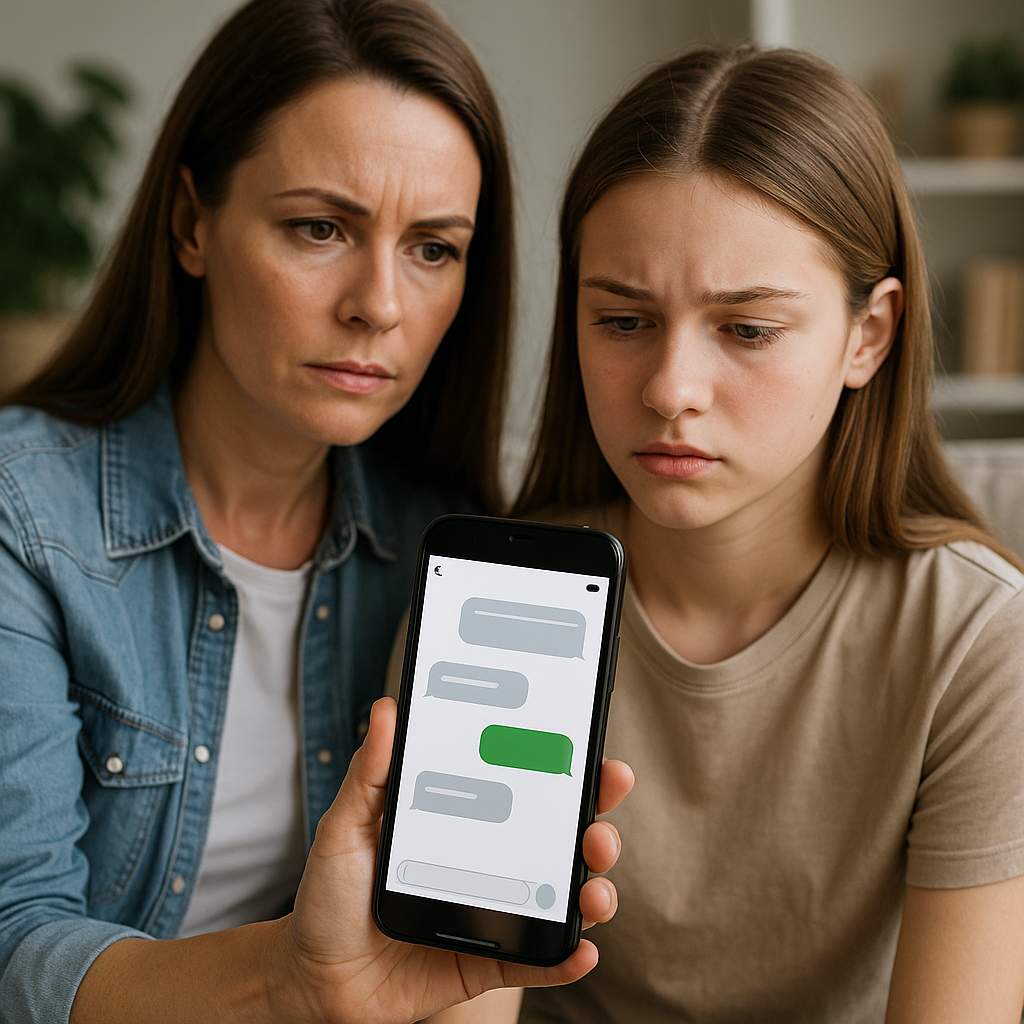
Choose a quiet time for this conversation, not during discussions about problematic behavior. Make it clear that you already use parental controls and that this is a standard child protection practice.Show real examples of online predators, cyberbullying and other risks so that your child understands that protection is based on concrete realities, not paranoia.
Actively listen to your child’s feelings about privacy and feel free to make adjustments. Perhaps you negotiate allowing more privacy in certain areas in exchange for continuous monitoring in others. This creates a sense of agency even within a protective framework.Reassure that you will never use information against him in non-security discussions.
Establish a clear policy on how you will respond if you find something troubling.Will you talk first or face the situation immediately?Will there be automatic consequences or will you investigate?These clear expectations create confidence because there are no surprises.Your child knows exactly how you will react and can prepare for difficult conversations.
Identifying Alert Signals in Message Patterns
Drastic changes in the amount of messages your child sends or receives may indicate abnormal behavior. If a child normally interacts with five friends and suddenly appears talking intensely to someone unknown, this deserves investigation. Similarly, if she frequently deletes messages or hides the phone when you approach, there is something she does not want you to see.
Exaggerated emotional language or changes in writing pattern may suggest that someone else is using the account. If your child is usually cheerful and suddenly their messages become depressed or aggressive, this reflects different emotional state.Messages from multiple people praising physical appearance or asking for photos should set off alarms about possible grooming or sextortion.
Requests for cash, gift card gift or personal information are immediate warning signs. Malicious people often ask for these details for exploitation. Similar, if your child receives messages from people who claim to be the same age but with suspicious profiles (stolen photos, generic information), there is a possibility of predator doing identity fraud.
Abnormal hours of activity, especially late at night, may indicate secretive relationship or dependence on online communication. Isolated social behavior combined with increased online activity suggests that your child is seeking digital connection to fill social void.
Balancing Protection and Privacy as Children Grow
Parental control is not a static system you set up and forget. As your child grows, their privacy needs legitimately increase while digital risks change shape. An eight-year-old needs much stricter monitoring than a seventeen-year-old.
Begin in the early years of school with strict contact control and total blocking of strangers. Gradually, during the intervening years, relax restrictions while maintaining monitoring of risk keywords.When your child enters adolescence, consider making a transition to periodic review rather than real-time monitoring, provided that he has demonstrated consistent responsibility.
Communicate your adjustments clearly and celebrate when your child gains more digital freedom. This serves as an incentive for responsible behavior and shows that you recognize their maturity.Make it clear that this expanded freedom can be reduced if there is abuse or dangerous situations, creating logical consequences for bad choices.
In the years of university preparation, consider a trust model with occasional checks instead of continuous monitoring.Your child needs to learn to make responsible digital decisions with you as a mentor, not as a police officer.This gradual transition prepares you for digital independence while you still provide support when needed.
Digital Education as a Complement to Monitoring
Technical monitoring is only half the safety equation. Active digital education protects your child when you are not observing, because it internalizes safety principles.Teach concepts such as not sharing personal information, recognizing attempts at manipulation and when to warn an adult about suspicious communication.
Discuss hypothetical situations regularly. Ask what your child would do if a stranger asked to meet you, if someone requested a photo of any kind, or if they received intimidating messages.These conversations prepare them to respond appropriately when faced with real situations.
Teach about the permanence of digital content. Once something is sent, it can be captured, shared or used against your child, even if he has no harmful intention. This understanding encourages critical thinking before sending messages. Emphasize that images or messages shared with a “trusted friend” may end up exposed inadvertently or deliberately.
Include discussions about emotional intelligence and healthy relationships. Online friends who immediately ask to talk in private, exaggerated praise or pressure to share every detail of their life are signs of unhealthy relationship.Your child needs to understand that real friendships respect boundaries and do not create dependence on constant validation.
Responding to Risk Incidents Discovered Through Monitoring
When you discover something troubling in monitoring, your immediate response determines how your child will respond in future risky situations. Responding with anger or severe punishment can make your child stop reporting problems, hiding dangerous information. Responding with understanding and solution focus keeps communication channels open for ongoing conversations about safety.
First, gather all relevant information about the situation.Capture screenshots of troubling conversations, identify all suspicious contact accounts, and document the schedule of events. This documentation is crucial if you need to involve law enforcement or block accounts. Review the information thoroughly before confronting your child to get a full picture of the context.
Start the conversation by asking about the situation in a non-accusatory way. Perhaps you do not understand the full context and your child can provide legitimate explanations. Listen to their perspective thoroughly before offering their judgment.Sometimes children are in situations that seem more sinister than they really are, but sometimes they are in real danger and their reaction determines whether they confess everything.
Together, create an action plan that addresses the risk immediately. This may include blocking the problematic contact, changing passwords, notifying the message platform about abuse, or engaging the police in crime cases. Have your child participate in the resolution process so that he feels empowered rather than victimized.
Specific Resources and Tools for Efficient Monitoring
Google Family Link is the native Android solution that offers contact control, app restriction and automatic blocking of unknown numbers. It does not require subscription and works seamlessly with your child’s Google account.The dashboard is intuitive and notifications arrive in real time when your alert criteria are triggered. The main limitation is that it does not capture complete content of all messages, it just summarizes contact activity.
Screen Time from iOS provides similar functionality for Apple devices, allowing you to set app limits and review what content is being accessed. You can manage allowed contacts and block certain numbers directly.IMessage integration offers conversation viewing, albeit in less detail than specialized third-party applications.The system works well within the Apple ecosystem, but is less powerful for deep monitoring.
Tools like Bark use artificial intelligence to monitor multiple messaging platforms simultaneously. Bark automatically detects risk signals like possible cyberbullying, sexual content, mention self-harm or signs of depression. You set the sensitivity level and receive alerts only for real risk item, avoiding information fatigue from hundreds of trivial reports. The subscription is moderately expensive but offers significant peace of mind.
Using OteApp, you can create a custom checklist of all the security measures you have implemented. You list each monitoring platform, each blocked contact, each alert keyword, and each communication protocol you have established. This visual record provides progress satisfaction and helps you remember what you did when you need to make further adjustments.Systematic organization prevents you from feeling overwhelmed by the complexity of multiple protection systems.
Continuous Monitoring System Updates and Adjustments
Technology changes constantly and new messaging apps pop up regularly. You need to update your knowledge about platforms your child uses to ensure their protections cover them all. Each quarter, research which new apps are popular with kids and set up appropriate monitoring. Apps like TikTok, Discord and BeReal have private messaging features that predators exploit.
Review your parental control settings every three months to ensure they remain aligned with your child’s development. A preteen who has gained responsibility may deserve relaxation from certain restrictions.Conversely, a teenager who has demonstrated risky behavior may need increased protections. These periodic reviews ensure that your protection system evolves along with your child.
Stay informed about new digital risks through trusted sources like Common Sense Media, National Center for Missing and Exploited Children or local digital security organizations.These groups regularly post alerts about new types of scams, dangerous trends in social networks, and how predators are adapting to new platforms.This knowledge allows you to protect your child from emerging threats, not just known risks.
Talk to other parents to learn what strategies worked well for their families.Parent groups in schools or online share experiences on monitoring and protect each other by identifying new problems.These conversations also normalize the discussion on digital security, creating community support when difficult situations arise.