Learn Crochet from Zero by Cell Phone!
Announcements
Do you want to learn crochet, but do not know where to start? With an application like OteApp, it is possible to master this traditional art directly by your mobile phone, without investing in expensive courses or displacements.
Announcements
The reality is that thousands of people discover crochet every day through mobile platforms, turning free minutes into practical and productive learning.This practical guide offers a structured way for you to start your crochet journey, with proven techniques and an essential checklist to track your progress.
Why Learning Crochet By Cell Phone Is the Best Choice
Learning crochet from scratch by mobile revolutionizes the way you access artisanal knowledge.You can study at work breaks, in the supermarket queue or before bed, without relying on fixed schedules or classrooms. The mobile phone offers total flexibility, allowing you to resume classes exactly where you left off, as many times as you need.
Specialized applications like OteApp combine high-definition videos with step-by-step instructions, making it easier to understand complex techniques. You view movements at different angles, pause when necessary, and study at your own pace.In addition, the cost is significantly lower compared to traditional face-to-face classes, with the advantage of having permanent access to content.
The online community that grows around digital crochet offers constant support, allowing you to share questions, showcase your projects, and receive feedback from other learners.This virtual interaction keeps you motivated and connected to people with similar goals, even studying from home.
The Basic Materials You Need to Get Started
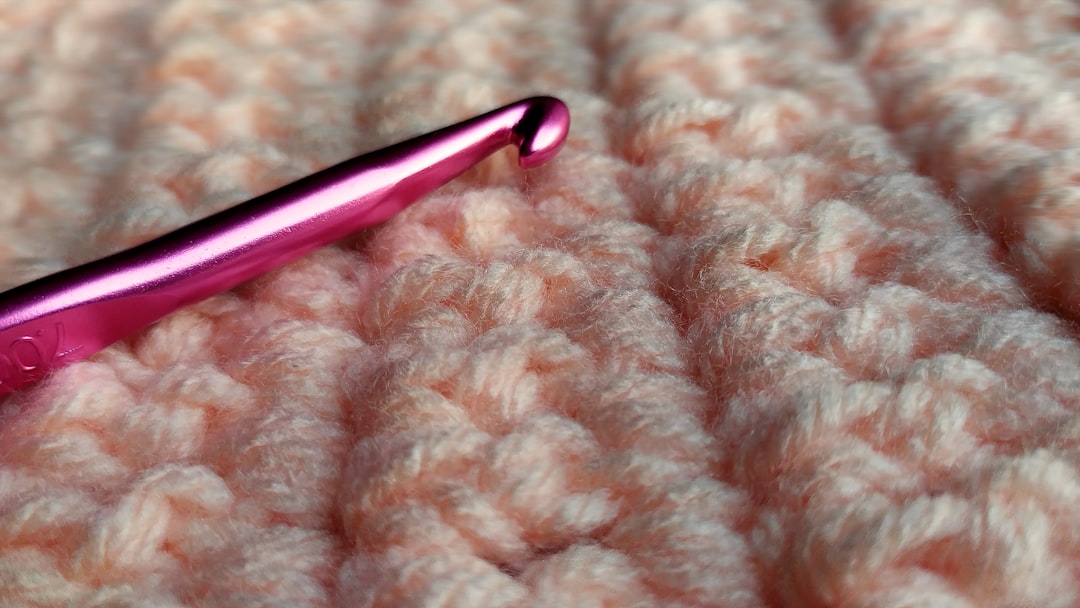
Before starting any crochet project, you should gather the essential materials. The most important is the crochet needle, which comes in different numbered sizes. For beginners, it is recommended to start with medium sizes, such as 4 or 5 mm, as they are easier to handle and allow you to better visualize the points.
Wire is the second critical material in your journey. Choose yarns of vibrant colors and medium weight, such as yarn number 4, which facilitates the visualization of the basic points. Very thin yarns are challenging for beginners, while very thick yarns can be frustrating if you miss a point. Invest in cotton or acrylic yarn of good quality, as they slide better on the needle and produce more uniform pieces.
You also need some complementary accessories that make a difference in your learning.Precision scissors, sewing needle or tapestry needle for finishes, stitch markers (which you can improvise with string), and a pen with paper to write down your doubts. A wire holder or even an empty coffee cup prevents the thread from wrapping in your hand while learning the first techniques.
Understanding the Fundamental Techniques of Crochet
The crochet starts with the sliding knot, the basis for absolutely every piece you will create. This simple knot creates the starting point by securely fixing the thread to the needle. Watch the specific tutorial on OteApp several times until you can do without thinking, as you will repeat this movement hundreds of times.
The low point is the second foundation that you must completely master. This point creates a denser and more compact texture, ideal for structured pieces such as bags or rugs. Practice making whole rows of low points, focusing on maintaining consistent tension of the wire. You will notice that the first attempts will become irregular, but this is completely normal and expected at this stage.
The high point is slightly more complex, but follows the same logical pattern as the low point.The difference is in the amount of turns you make around the needle, creating a more open and airy texture. Mastering these two points opens doors to numerous projects, from towels to full clothes.
More advanced points such as double high, tidal point and variations come naturally as you progress. Do not try to learn everything simultaneously; the OteApp was developed with pedagogical progression, presenting new techniques only when you are ready. Each new point is based on the previous ones, creating a solid construction of knowledge.
Your Essential Checklist to Start Crochet
Use this structured checklist to track your progress and ensure nothing important has been left behind. Mark each item as you go, creating a visual record of your development.
Basic Materials: Have you gathered a crochet needle size 4 or 5 mm?Have at least three different colors of thread number 4?Have precision scissors, sewing needle and stitch markers?Have a quiet, well-lit place to practice?Did you check if your mobile phone has OteApp app installed and updated?Did you test the quality of the connection to ensure that the videos do not hang?
Technique Learning: Can you make the sliding knot three times in a row without making a mistake? Can you make a full row of low point with approximately uniform tension? Can you visually identify when you made a point error? Do you know how to undo points when necessary without destroying the whole piece? Do you understand how to read basic crochet patterns? Have you watched the high-point tutorials at least twice each?
Practical Development: Did you complete your first small project, even if imperfect? Created at least three different pieces using points you master? Took pictures of your works for future reference? Took note of the specific difficulties you faced? Created a virtual or physical environment where you store your finished projects? Started viewing ideas for future pieces and noted in a list?
Continuous Progress: Did you explore a new point each week? Challenged yourself with a project slightly above your current level? Participated in any online crochet community?Watched interviews with experienced crochet artists for inspiration?Documented your progress in short videos? Created a realistic goal for the next three months?
Practical Projects for Your First Days
Your first projects should be simple but rewarding, to keep motivation high. A crochet square of different colors is the ideal design for beginners, as it uses only low or high point repeatedly. You create something tangible that you can use as a pot holder, part of a blanket or even an envelope to gift friends.
A hair band is another excellent design that combines practical utility with simple execution.You learn how to make chains to start with, work rows of basic stitches and end with a simple seam. The result is an accessory that you will actually use, reinforcing the sense of accomplishment.OteApp offers tutorials specific to this project, divided into manageable steps.
Creating a small bag or necessaire introduces slightly more advanced concepts like raises and decreases. These concepts are absolutely fundamental to crochet because they allow change of shape and size. Once you understand how to increase and decrease, you can create almost any format you imagine. Dedicate special time to these points, as they greatly expand your creative possibilities.
A simple scarf is a project that takes many hours, offering excellent repetitive practice. You will work the same technique for weeks, refining your tension and speed naturally. As you progress, the scarf will clearly show its evolution, with the first looser points and the last more uniform.
Avoiding Common Mistakes from Beginners
The most frequent mistake is to keep the tension too tight at the first points. You fear losing the thread or that the piece falls, then tightens the needle too much. This creates tiny and difficult points to work on in the following rows, frustrating enormously. The solution is to keep the wire slightly loose, trusting that the crochet structure keeps everything safe.
Confusing the number of points is another common problem that causes deformation in the piece. Many beginners lose the count or do not count the points before starting the next row. Always use point markers, even in simple projects, to signal the first and last point.OteApp offers specific counting techniques that prevent this problem completely.
Trying to learn multiple simultaneous points disperses your attention and makes everything more difficult. Focus on a single point until you master it completely, then move on. Skipping learning steps creates knowledge gaps that appear as later difficulties.The pedagogical progression of OteApp has been carefully planned to avoid this problem, so follow the recommended order.
Abandoning a project when something goes wrong is an understandable reaction, but it completely defeats your learning. In crochet, you can always undo the last points and redo, or even completely dismantle and start again. This concept of “reversibility” is one of the biggest advantages of crochet over other arts. Develop confidence in the ability to correct mistakes quickly.
Maintaining Consistency and Progressing Rapidly
Set a fixed daily time to crochet, even if it is only fifteen minutes. Consistency lasts longer; three weeks of fifteen minutes daily produce much better results than a three-hour session per week.Your brain and fingers need to process this information regularly to create real muscle memory. Choose a time that naturally fits into your routine, such as right after waking or before bed.
Track your practice time and number of completed pieces to view your progress objectively. Create a simple board where you mark the days you practiced, creating a “success chain” that motivates you not to break. This simple system has turned many hobby passengers into lasting skills because it offers constant visual feedback.OteApp offers specific features for tracking that synchronize with your goals.
Challenge yourself progressively with projects slightly above your current level. If you have mastered simple squares, try one in the shape of a diamond. If you have achieved straight tracks, try to create curves. This manageable discomfort zone dramatically accelerates your learning. You do not want to stay in very easy projects for a long time, as this causes boredom, nor jump to impossible projects, as this causes frustration. Balance is the key.
Seek inspiration by constantly exploring projects that real people have created. Visual sharing platforms offer endless crochet ideas of different levels and styles. You will find designs that inspire you, techniques that intrigue you, and creators whose approach you admire. Save your inspirations in a digital folder and consult when you feel stuck or unmotivated. This practice keeps your enthusiasm high months after the start.
By integrating all these practices with OteApp support, you lay the foundations for a learning journey that keeps expanding. Mobile crochet from scratch is not only possible; it is a quick and affordable way to develop a valuable skill that offers relaxation, creativity and tangible satisfaction.