Automotive Scanner App: Full Diagnosis
Announcements
An automotive scanner app provides complete diagnosis of your vehicle in seconds, identifying problems before they become expensive. With advanced technology, you can read error codes, monitor performance and make decisions based on real maintenance data.
Announcements
Most drivers are unaware that their modern cars have computerized systems that record every anomaly.A car scanner connects to this system, translating technical information into simple language for you to understand exactly what is happening with your vehicle.
How an Automotive App Scanner Works
The basic operation of an automotive scanner involves connecting via Bluetooth with the OBD-II (On-Board Diagnostics) port of your car, usually located under the instrument panel. This port exists in virtually all vehicles manufactured after 1996, serving as an access point to the electronic systems of the car. The app communicates with the on-board computer, requesting information about sensors, motors and other components.
When you connect the scanner device to your vehicle, it searches for Diagnostic Trouble Codes (DTCs), which are error codes stored by the engine control unit.These codes indicate exactly which system is in trouble, in which cylinder, or which sensor has non-standard reading. The app turns these technical codes into understandable descriptions, showing the severity of the problem and possible causes.
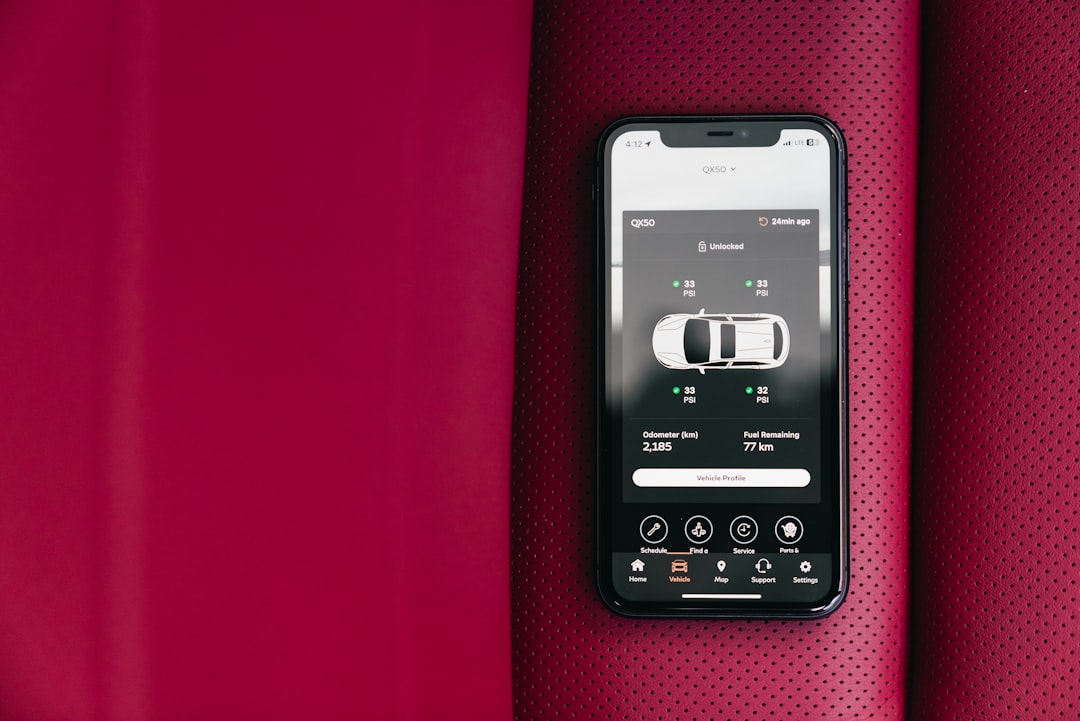
In addition to reading errors, the scanner provides real-time data on the operation of the vehicle.You can track engine temperature, revs per minute, fuel consumption, cooling fan speed and dozens of other simultaneous parameters. This continuous monitoring capability allows you to identify emerging problems before they manifest as complete failures.
Key Features of an Automotive App Scanner
Reading error codes is the most fundamental functionality and sought after by users. The app identifies the specific code (such as P0300 for random detonation on the engine), provides the translated technical description, points out possible root causes and suggests corrective actions. You can register these codes to share with your mechanic, saving diagnostic time and unnecessary costs.
Real-time monitoring provides continuous visualization of vehicle parameters while you drive. Some apps graphically show how engine temperature varies during acceleration, how the injection system is responding, or how oxygen sensors work.
Many modern automotive scanners include functionality to erase error codes after the problem is resolved. This ability is important to reset the system and confirm that the fault has actually been fixed.However, you should exercise caution, as deleting codes without resolving the underlying problem only masks the fault temporarily.
Data history and reporting allows you to track vehicle health over time.More advanced apps store records of found codes, sensor readings and failure events, enabling trend analysis.If a sensor starts to provide increasingly non-standard readings, you identify this progression and plan maintenance preemptively.
The actuator testing feature allows you to send commands to specific vehicle components, verifying that they are responding correctly. You can request that the canister valve open, the radiator fan turn on, or that the injectors work, confirming that the actuators are operating normally.
Advantages of Using an Automotive Scanner App
Money saving is an immediate and significant advantage for any vehicle owner.You avoid unnecessary diagnostics in workshops, which often charge high amounts just to connect the equipment and read the codes.With the app on your smartphone, you make this preliminary diagnosis for free or for a small monthly subscription.
The knowledge gained about your vehicle allows for more informed decisions about maintenance and repairs. If the app identifies a defective catalytic burner code, you can research specifically about this component, compare prices and budget with workshops before taking the car. This prior information puts you in a position to be able to negotiate better with mechanics.
Early identification of problems can prevent catastrophic and dangerous failures. A faulty oxygen sensor does not initially appear severe, but it affects fuel consumption and can damage the catalyst if ignored. By identifying the corresponding code quickly, you can repair before the damage spreads to other systems.
The scanner app provides safety in the literal sense, helping to diagnose problems in vehicle safety systems. Brake sensors, stability systems, airbags and other critical components generate specific codes when they fail.
For owners who like customization and tuning, the scanner provides crucial data for performance optimization.You can monitor engine behavior before and after adjustments, compare different settings, and make decisions based on real metrics instead of assumptions.
Differences Between Basic and Advanced Scanners
Basic scanners read only the standardized fault codes (Generic DTCs) that work on any vehicle brand. They identify major problems and work well for preliminary diagnostics.However, they have limitations on detailed data and do not access manufacturer-specific functions.A basic scanner costs less and is ideal for occasional users who want to have an emergency tool.
Advanced scanners access manufacturer-specific codes (Proprietary DTCs) that contain much more detailed information about the specific operation of each brand.A Volkswagen, for example, stores different data from a Toyota, and an advanced scanner can interpret all these nuances. These scanners also offer full actuator testing, module programming, and access to systems such as automatic transmission and ABS brakes.
The price difference is considerable: basic scanners range from fifty to two hundred reais, while professional scanners can cost thousands.For the average owner, an intermediate scanner offers the best balance between functionality, price and ease of use. It accesses enough data for reliable diagnosis without the cost of professional equipment.
Compatibility also varies by scanner type.Basic scanners work on virtually any modern vehicle, while advanced scanners often have limitations by brand or even model and specific year.
How to Choose the Ideal Automotive Scanner App
The first factor to consider is compatibility with your specific vehicle. Check the make, model and year of your car, then refer to the app documentation to confirm full support. Some apps work on any modern vehicle, while others have limitations by brand or offer limited functionality on certain older models.
The user interface is very important, especially if you do not have technical experience. A good scanner app presents clear information, using accessible language instead of pure technical jargon.The best apps translate code automatically, explain what each sensor reading means and suggest next steps without requiring you to search for unknown technical terms.
Evaluate the type of connection offered by the scanner device. Some require separate Bluetooth adapters, while others work with adapters already available in the market. Make sure the app accepts multiple adapters, as this offers flexibility and avoids being stuck to a single hardware manufacturer. The quality of the Bluetooth connection directly affects the reliability of the readings.
Customer support and documentation are often overlooked, but essential when you face a specific situation with your vehicle. Look for apps with active communities, video tutorials, and responsive support.A cheap app with poor support can become frustrating when you need clarification on a specific code or have connection issues.
Consider whether the app offers exportable reports and data history. The ability to generate PDF reports or share data with your mechanic significantly increases utility.Some apps allow you to save snapshots of specific errors, very useful for tracking intermittent problems that occur sporadically.
Frequently Asked Questions About Apps Automotive Scanner
What is the difference between OBD-1 and OBD-2? OBD-1 is the diagnostic system prior to 1996, with different proprietary protocols for each manufacturer, making it virtually impossible for a single scanner to work on all cars. OBD-2 is the standard adopted from 1996, standardizing error codes and communication protocols on all vehicles, allowing a single scanner to work on different brands. If your vehicle was manufactured after 1996, it has OBD-2.
Using an automotive scanner can damage the vehicle or electronics? No, as long as you use a legitimate, well-manufactured scanner. The OBD-2 connection is specifically designed to allow risk-free diagnosis.What can cause problems is connecting very low-quality equipment or using fake adapters that send incorrect signals, but a reliable brand scanner does not offer risk. The OBD-2 port was developed precisely to allow third parties to safely diagnose.
Why do some errors keep reappearing even after repairs? Errors can reappear for various reasons: the underlying problem has not been completely solved, the repairer has just deleted the code without fixing the cause, faulty sensors affecting multiple systems, or intermittent problems occurring only under certain driving conditions. If a code comes back up, use the scanner again to confirm whether it is the same code or a different code, as this helps guide more accurate diagnosis.
Can an app scanner predict future failures? Partially. If you monitor real-time data regularly, you can identify worrying trends such as increasingly non-standard sensor readings or gradually increasing fuel consumption.However, the scanner cannot predict failures that leave no signal on the monitored sensors.It is more a short-term reactive and preventive diagnostic tool than predictive in the long term.
All scanners work with any Bluetooth adapter? Not all, some apps and adapters use proprietary protocols or have incompatibilities. Ideally check the list of compatible adapters provided by the app developer.There are generic OBD-2 Bluetooth adapters that work with almost any app, but always confirm before purchasing.
Which OBD-2 adapter should I buy to use with the app? Look for genuine ELM327 Bluetooth or WiFi adapters, which are the most compatible and reliable.They support all standard OBD-2 protocols and work with almost any scanner app. Watch out for fake clones that are very cheap as they offer unstable connections.An original adapter costs between fifty-one and fifty dollars and lasts for years.
Can I delete all error codes at once? Most apps offer this functionality, allowing you to manually delete codes or delete full history. However, deleting codes without resolving the underlying problem is counterproductive, as errors will likely reappear the next time you drive. Use the delete codes function only after you have confirmedly resolved the problem that caused the error.
Can an automotive scanner be used on motorcycles?Some scanners work on modern motorcycles that have OBD-2 electronic systems, especially larger displacement motorcycles.However, old motorcycles and many Asian models do not have standard OBD-2 port. Check if your specific motorcycle has the door before investing in a scanner. If you have, the equipment will work normally, allowing diagnosis of electronic injection problems and digital ignitors.
What is the service life of a scanner adapter? A quality adapter lasts from five to ten years with regular use, depending on the quality of manufacture and care in storage. Most failures occur from physical damage, prolonged exposure to extreme temperatures or loose connectors. If stored in a dry and protected place, your adapter will likely last for many years without problems.
The scanner app replaces regular maintenance on the mechanic? It does not replace, but complements. The scanner helps in diagnosing electronic problems and adjusts the urgency of repairs based on real data. You still need regular maintenance like oil change, filters, mechanical component review and professional inspections. The scanner makes these visits to the mechanic more efficient because you already know which systems have problems.
Do I need wifi or mobile data to use the scanner app? No, most scanner apps work offline after installation. The Bluetooth connection to the OBD-2 adapter is local and does not require internet. Some premium apps sync data in the cloud or offer extra functionality online, but these functions are usually optional and the diagnostic core works completely without connection.
How much does it cost to keep a professional scanner app running? Many basic apps are free or cost less than a hundred dollars for a single purchase. Apps with advanced features may require a monthly subscription of ten to forty reais. The largest cost is the OBD-2 adapter, which varies from fifty to three hundred reais depending on quality and extra features. Considering that a professional diagnosis in a workshop costs fifty to two hundred reais, the investment pays off quickly.
Practical Tips for Using Your Automotive Scanner App Effectively
Take regular readings of your vehicle even when everything seems to be working normally. Establish a monthly or quarterly routine to connect the scanner and check for pending codes or fault history. This continuous monitoring allows you to identify emerging problems before they manifest as complete failures or increased visible fuel consumption.
Document all important readings in a digital file or notebook. Save information about codes found, when they occurred, what repairs you performed and how the vehicle responded.This personal history becomes invaluable when you need to explain a recurring problem to a mechanic or when you are considering buying specific spare parts.
Use real-time monitoring to understand how your vehicle works in different conditions. Compare readings when driving in the city with readings on the road, observe how the engine responds during acceleration versus cruise, and note temperature variations on hot and cold days.
Search each code found in the app or online before deciding on repairs. The same code can have multiple causes: an oxygen sensor code can mean faulty sensor, but it can also indicate worn spark plug or clogged catalytic burner.
Keep the adapter protected and store it properly when not in use. These devices are sensitive to extreme temperatures, humidity and physical damage. A well-groomed adapter will last much longer, avoiding the need for frequent replacement. Consider keeping in a specific bag or case when not in use.
Take advantage of the ability to test actuators to confirm repairs. After replacing a valve or sensor, use the scanner to send test commands and verify that the new component is responding correctly.This provides independent confirmation that the repair was successful without relying solely on how the vehicle feels driving.