Detect Metals by Mobile: Best App
Announcements
Detecting metals by mobile is a modern reality that simplifies tasks that previously required expensive and specialized equipment. With advanced applications, you can turn your smartphone into a functional and practical metal detector for various everyday situations.
Announcements
The technology behind these applications has evolved significantly, allowing ordinary users to access features that were previously unique to professionals. If you are looking for efficient tools to identify metals, knowing the advanced strategies of using these apps can multiply your results and optimize your experience.
How Metal Detection Works on Smartphone
Most modern metal detection applications use the magnetometer integrated in your mobile phone, a sensitive sensor capable of measuring changes in the magnetic field around the device. When you approach a metal object from the smartphone, the sensor detects the disturbance in the magnetic field and the app converts this information into visual and sound signals. This process happens in real time, offering immediate feedback on the presence of metals nearby.
Unlike traditional metal detectors, which use induction coils and complex electronic circuits, mobile applications rely solely on the device’s native magnetometer.This means that accuracy and range vary by smartphone model and sensor quality.Some newer devices have high-sensitivity magnetometers, while older models may have significant limitations on detection.
The algorithm behind the app constantly processes the magnetometer data and compares the readings with an established baseline.When a magnetic anomaly is identified above a certain threshold, the application triggers audible and visual notifications. Understanding this basic operation is essential to optimize the use of the tool and avoid false positives that impair its operational efficiency.
Advanced Strategies to Maximize Detection
To get the best results when using a metal detection app, you need to master advanced techniques that go beyond basic use. The first strategy involves properly calibrating the sensor before starting any search, allowing the application to establish an accurate baseline of the environment. Open the app in an area known to be metal-free, keep the phone stable for a few seconds and wait for calibration confirmation. This process eliminates environmental interference and significantly increases the reliability of subsequent detections.
The second advanced strategy concerns the scanning pattern you adopt during the search. Instead of making random movements, establish a systematic pattern such as straight sweeps or concentrated circular motions.This methodological approach ensures uniform coverage of the area and reduces the chance of losing important metal objects. Keep the mobile phone at a consistent distance from the ground or surface you are analyzing, as proximity directly influences the sensitivity of the detection.
The third strategy involves adjusting the sensitivity settings of the app according to the environment in which you are working. Environments with a lot of magnetic interference, such as near transmission lines or iron structures, require different adjustments from quiet rural areas. Reducing sensitivity in high interference zones avoids false alarms, while increasing it in clean areas allows detecting metals smaller or farther away.
Practical Applications in Daily Life
Mobile metal detection offers practical solutions in a variety of contexts that go beyond recreational interest. Construction professionals use these apps to locate metal pipes and electrical wiring within walls before drilling holes or cutting. By correctly identifying the position of these elements, you prevent dangerous accidents and costly damage to infrastructure. Property owners also benefit from inspecting problem areas or searching for metals buried in their own land.
Archaeology researchers and historians leverage technology for initial site prospecting, identifying buried metal artifacts accurately before costly excavations.Hobists and treasure-seeking enthusiasts use these applications to track ancient coins, lost jewelry, or valuable metal items on beaches and terrain.Securities and surveillance professionals also adopt these apps as quick inspection tools at access points or sensitive facilities, complementing traditional detection equipment.
Parents and educators can use the tool as a teaching resource to teach children about magnetism and physical phenomena in an interactive and engaging way. Plumbers and electricians often consult these apps to locate pipes or wiring embedded in structures, saving time in preliminary diagnostics. Each practical application demonstrates how mobile technology has democratized access to capabilities that were once the privilege of highly specialized professionals.
Important Limitations You Should Know
Despite technological advances, mobile apps for detecting metals have significant limitations that you need to understand to establish realistic expectations.The detection range is considerably shorter than in professional detectors, usually limited to a few centimeters away.Small or deeply buried metals will hardly be detected, as the smartphone’s magnetic field cannot penetrate large distances with enough force to record measurable changes.
Precision also varies dramatically depending on the type of metal present, as different metals generate magnetic fields with varying intensities. Iron and its compounds are detected relatively easily, while non-magnetic metals such as copper, aluminum and gold present much greater challenges. This limitation eliminates the possibility of using the app as a reliable tool to search for gold jewelry or copper alloys without ferromagnetic components, reducing their applications in certain prospecting scenarios.
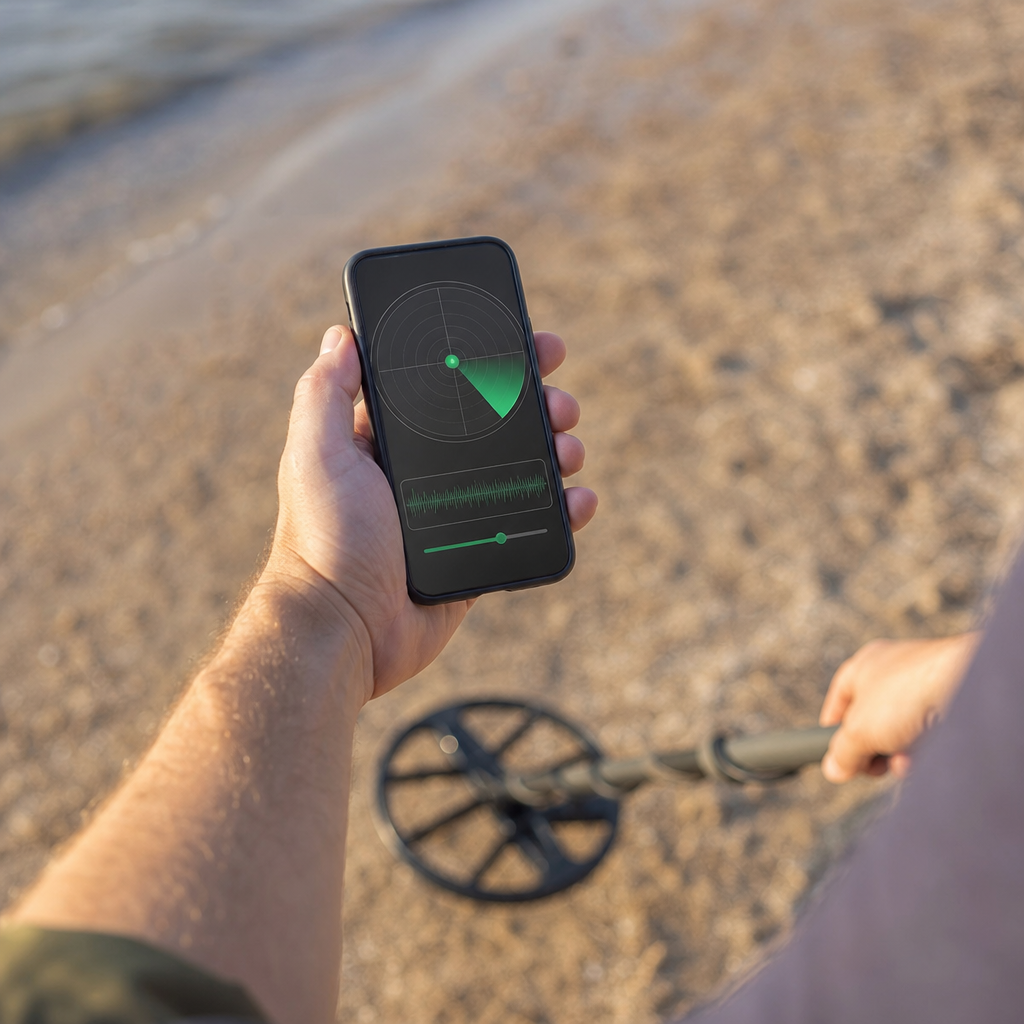
Environmental magnetic interferences also compromise reliability, especially in dense urban areas with complex electrical infrastructure or proximity to powerful electronic devices. Metal-framed walls, nearby refrigerators and transformers cause magnetic noise that confuses the sensor and generates abundant false positives.You will need to learn to distinguish between real detections and environmental interferences, which requires experience and extended familiarity with the specific tool you choose to use.
Technical Optimizations for Better Performance
To extract maximum performance from your metal detection application, consider technical optimizations that significantly improve the quality of results.Start by ensuring that your phone’s magnetometer sensor is always clean and free from obstructions, as dust and dirt can interfere with reading. Keep your smartphone away from other powerful electronic devices during use, as smart watches, wireless headphones and chargers can generate electromagnetic fields that affect accuracy.Disable other sensors you don’t need, such as GPS and Bluetooth, to reduce power consumption and possible electronic interferences that compromise the sensitivity of the magnetometer.
Periodic calibration is another crucial optimization that you should not neglect during prolonged operations.Every half hour of continuous use, perform a complete recalibration to re-establish the baseline and compensate for temperature variations or changes in environmental conditions.Some applications offer stabilization mode that smoothes readings and reduces rapid fluctuations caused by vibrations or involuntary hand movements.Enabling this feature when available dramatically improves the clarity of real versus random noise detections.
Adjust the update speed and interface responsiveness to your operational needs, as more responsive apps consume more battery but offer more accurate real-time feedback.If you are in a long-lasting operation, balance responsiveness with energy efficiency to keep the battery functional throughout the entire period of activity. Keep the phone at a stable ambient temperature, as extreme fluctuations can push the magnetometer sensor away from its optimal operating range, compromising the reliability of the readings obtained.
Choosing the App that’s Best for Your Needs
When selecting an application to detect metals, you will find several options available with distinct features and specifications that directly affect its practical performance. Evaluate first the compatibility with your specific smartphone model, checking that the app is optimized for the version of the operating system that your device runs. Generic apps work on almost any phone, but those developed specifically for certain brands take better advantage of the particular characteristics of the magnetometers of that manufacturer, resulting in superior sensitivity.
Consider the user interface and ease of configuration as determining factors, especially if you have no prior experience with detection tools. An intuitive app reduces the learning curve and allows you to start getting practical results quickly. Also examine the available calibration options, sensitivity customization, and the quality of feedback provided, whether visual, sound, or haptic. Apps that offer detection history, magnetic intensity charts, and detailed logs add significant value for further analysis and continuous improvement of your operating technique.
Read user reviews carefully, paying special attention to reviews about reliability, consistency and compatibility with different smartphone models. Users establish whether the app works stably or has frequent crashes, and whether the results match the promises of the developer. Prefer applications that have regular updates, indicating active technical support and willingness of the developer to continuously improve the tool. Apps abandoned by the development team often face compatibility problems with newer versions of the operating system, making them obsolete quickly.
Also, analyze whether the app offers advanced features aligned with your specific needs, such as grid search mode, export detection data, or integration with maps for geographic tracking of findings. Premium applications often justify the cost through robust features that free applications do not offer. Test demo or free versions before investing in paid versions, allowing you to personally verify that the tool actually works properly in your specific operating environment.
Advanced Signal Interpretation Techniques
Mastering the interpretation of the signals provided by the application is essential to differentiate real detections from frequent interferences or false positives.Most apps display magnetic intensity through numerical or visual scales that vary as you move the phone. Learn to recognize the characteristic patterns of genuine detection: they usually start weak, gradually increase as you approach the metallic object, and decrease as you move away.Environmental interference tends to show more random patterns, without the smooth progression typical of an isolated metal source.
Develop the auditory sensitivity to the sound patterns emitted by the app, because different types of metals and distances produce different tones and different alert rhythms. A large nearby metallic object generates continuous sounds at high frequency, while a small or distant object produces spaced clicks at lower frequency. With experience, you will learn to estimate approximately the size and distance of the metal only by sound patterns, without the need to constantly observe the screen. This sensory learning is fundamental for efficient operations in environments where you need to keep the cell phone in a specific position or where maintaining visual contact with the screen is impractical.
Combine visual and sound information to validate detections, creating redundancy that increases the reliability of the final result. If the visual scale indicates the presence of metal but the sound pattern appears irregular, continue investigating the area before confirming detection.Some sophisticated applications provide real-time graphics of magnetic field fluctuations, allowing statistical analysis of readings to more accurately distinguish real signs of random noise. Investing time in mastering these advanced interpretation techniques pays off widely when working in challenging environments or when searching for small objects that generate weak signals.